
Library · Technologies
Inside the BioSIP panel line
Compressed agricultural fibre and mycelium binder, pressed to structural tolerance in 90 minutes.
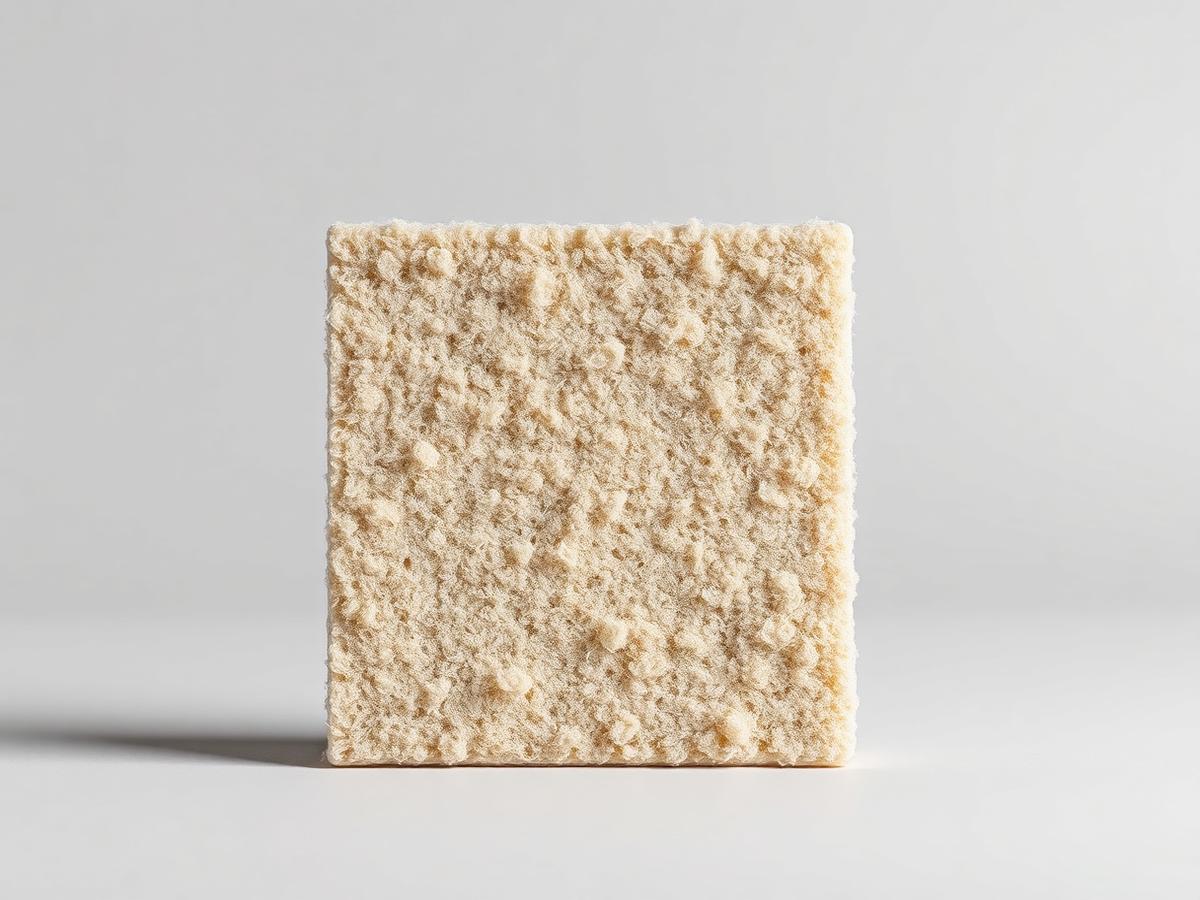
A BioSIP panel begins as loose agricultural fibre — straw, reed and hemp shiv — dried to 9% moisture and dosed with a mycelium binder. The press cycle is 90 minutes at 140 °C, and the tolerance target is ±1 mm across a 2.8 × 7.2 m sheet.
Automation is not a luxury here: bio-based feedstock varies batch to batch, so the line measures density and moisture continuously and adjusts press pressure in real time. A human operator cannot hold that loop, which is why zero-defect output depends on the machine vision stage rather than on final inspection.
Rejected panels are ground and re-enter the line as feedstock, so scrap is a loop rather than a loss. The published rejection rate for the current cell is 3.1%, mostly edge delamination on the first panel after a die change.
Open knowledge — CC BY-SA 4.0. Copy it, correct it, cite it.
Share this