Library · Standards · File 21
Rammed earth: the standard everyone borrows and the technique Türkiye's own code doesn't cover
New Zealand's NZS 4297/4298/4299 is the closest thing rammed earth has to a global structural code — the one ASTM's own US guide explicitly defers to. A peer-reviewed dataset shows compressive strength swinging eightfold within one test program, a shake-table study shows engineered seismic detailing nearly doubling a wall's collapse threshold, and Türkiye's decades-old TS 2515 covers kerpiç masonry but leaves rammed earth's distinct monolithic technique without a dedicated code path.
Last reviewed — First publication; figures and claims checked against NZS 4297:1998, NZS 4298:1998, NZS 4299:1998, ASTM E2392/E2392M-10(2016), IRC 2021 Appendix AU, New Mexico Earthen Building Materials Code (14.7.4.12), TS 2515 (April 1985), Barrera et al.'s 2023 Buildings study, Narloch & Rosicki's 2026 Materials study, and Nouri, Safehian & Mir Mohammad Hosseini's 2023 IJBPA study
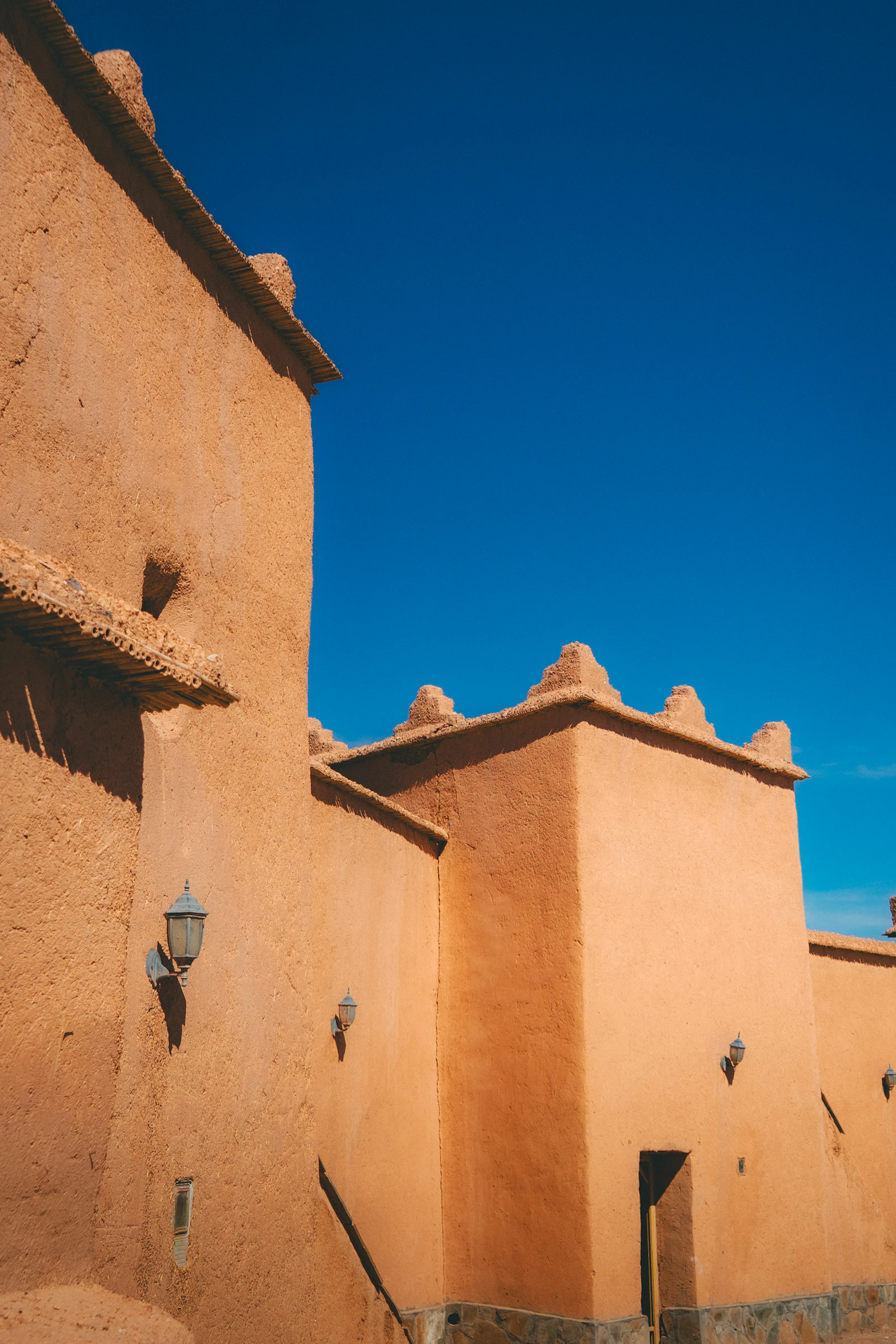
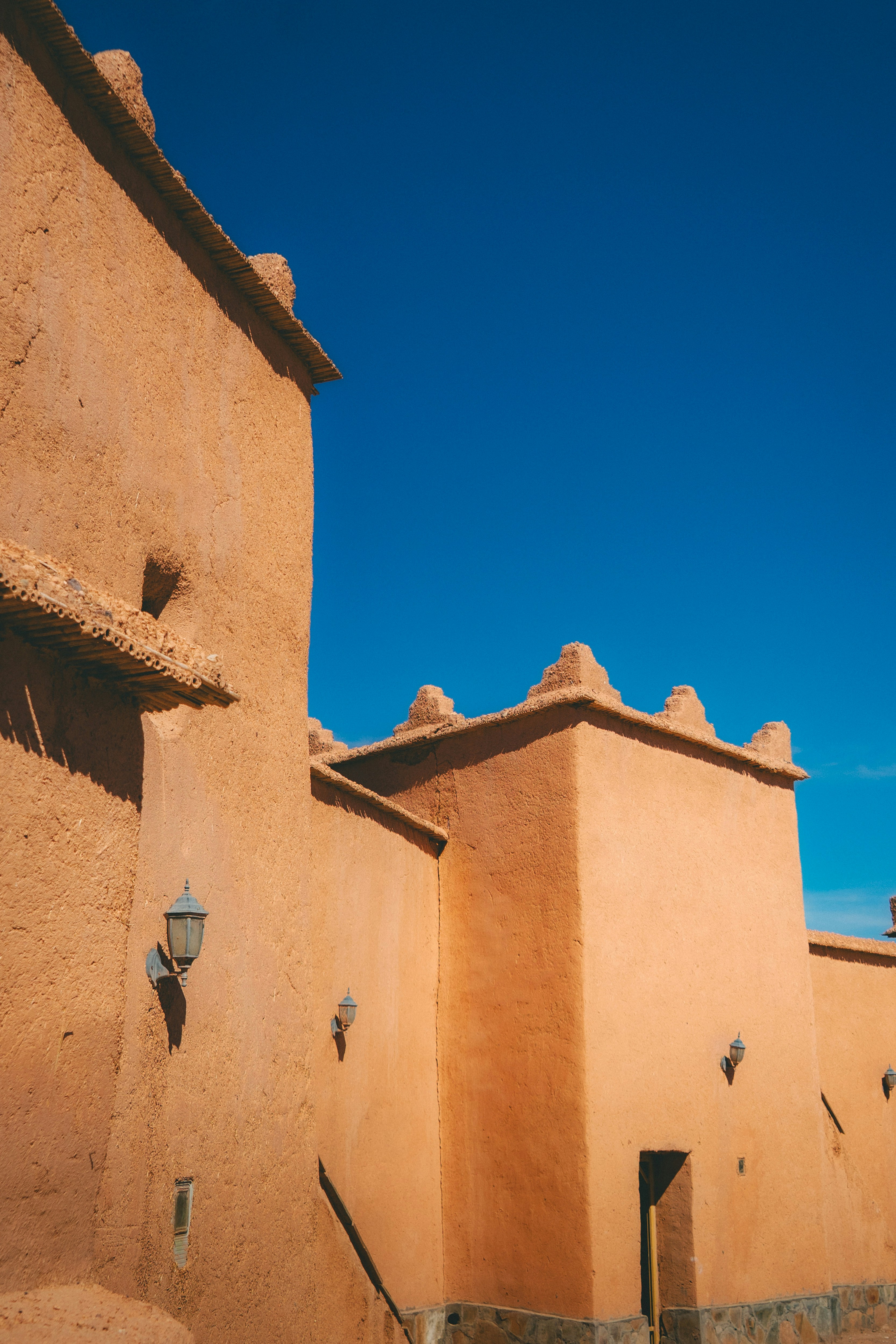
Mathieu Gauzy · Unsplash License
NZS 4298 standard-grade minimum: 1.3 MPa compressive / 0.25 MPa flexural tensile · Narloch & Rosicki 2026: compressive strength 3.62–29.06 MPa (mean 13.42) across 30 specimens · Barrera et al. 2023: unreinforced collapse at 0.76g PGA vs. steel-plate-reinforced survived 1.02g (+92%) · New Mexico code: min. 300 psi (≈2.1 MPa), min. 18 in (≈457 mm) wall · Nouri et al. 2023: rammed earth cut CO2 up to 1,245 kg/ton vs. fired brick (material-level, >95% embodied-energy reduction)
"Earth building" is not one technique, and this site already covers two of its relatives under different names. Kerpiç — sun-dried mud-brick masonry, governed in Türkiye by the 1985 standard TS 2515 — is discussed as a distinct historical and regulatory case elsewhere in this series. Compressed earth block (CEB), summarized in this site's own "earth-building" Signal note, is a third technique again: mechanically pressed, stackable units, typically reaching 4–8 MPa. Rammed earth is different from both: soil (often cement-stabilized) is compacted in horizontal lifts directly inside temporary formwork to build a monolithic wall, course by course, with no fired or pressed unit involved at all. The three techniques share a material and a marketing vocabulary, but not a structural profile, a testing regime, or — as this file's Türkiye section shows — the same regulatory status.
Formed, not stacked: what rammed earth actually is#
A rammed earth wall is built by placing a well-graded soil mix — sand, gravel and a controlled proportion of clay, sometimes with Portland cement added as a stabilizer — into a rigid formwork panel and compacting it in successive lifts, typically 100–150 mm thick, either by hand-held pneumatic rammer or mechanized tamper, until each lift rings solid under the rammer. The formwork is then raised and the process repeats, producing a solid, monolithic wall with the characteristic horizontal striations of each compacted lift visible in the finished surface. Unlike adobe or CEB, there is no discrete unit to test independently of the wall it becomes part of — which is exactly why the structural standards covering rammed earth put so much weight on in-situ moisture and compaction control during construction, not just a lab test of the input soil.
The closest thing to a global structural standard: New Zealand's three-part system#
No single international body publishes a universally adopted rammed earth structural code. The most complete, most frequently cited engineering framework is New Zealand's three-standard system: NZS 4297 (engineering design of earth buildings), NZS 4298 (materials and workmanship) and NZS 4299 (earth buildings not requiring specific engineering design). NZS 4298 sets the numeric bar for standard-grade rammed earth precisely: minimum characteristic compressive strength of 1.3 MPa, minimum flexural tensile strength of 0.25 MPa, compaction to at least 98% of maximum dry density, and mix moisture content within 3% of optimum as determined by the standard's own compaction test (NZS 4402 Test 4.1.1) — with cement-stabilized mixes required to be placed within one hour of initial wetting, before hydration compromises compactability. Where a building meets NZS 4299's material grade and geometric limits, single- and two-storey construction can proceed without project-specific engineering; anything beyond those limits routes through NZS 4297's full design methodology.
Everyone else borrows from it#
The US's own national reference, ASTM E2392/E2392M (Standard Guide for Design of Earthen Wall Building Systems), is explicit about its own limits: Section 1.1 states it "provides guidance," not binding requirements, and it is written to help "frame decisions for individual projects" rather than to substitute for a code. For structural values, it doesn't set its own numbers — Section 7.1.2 directs unstabilized earthen walls to New Zealand's NZS 4297/4298/4299, cement-stabilized earth to existing concrete and concrete-masonry standards, and seismic loading to ASCE 7. The IRC's 2021 earthen appendix, approved after a multi-year process, covers cob construction (monolithic adobe) specifically — it does not extend to rammed earth, and being an appendix, it still requires individual jurisdictions to adopt it before it applies at all. The one US code that names rammed earth explicitly and sets its own numbers is a state-level one: New Mexico's Earthen Building Materials Code devotes an entire section (14.7.4.12) to rammed earth construction, requiring a minimum ultimate compressive strength of 300 psi (≈2.1 MPa) for stabilized or unstabilized rammed earth soil alike, a minimum exterior wall thickness of 18 inches (≈457 mm), and a stabilized or 2,500-psi-concrete first lift rising at least 3.5 inches above finished floor level. Table 1 lines these four frameworks up directly.
Table 1 — Rammed earth's patchwork of standards#
| Standard | Scope / status |
|---|---|
| NZS 4297 / 4298 / 4299 (New Zealand) | Full engineering design + materials/workmanship + non-specific-design limits system. Sets its own numeric structural values — the framework others reference. |
| ASTM E2392/E2392M (USA) | A design guide, not a mandatory code (Section 1.1). Defers structural values to NZS 4297/4298/4299 and to existing concrete/masonry standards. |
| IRC Appendix AU/U (USA, model code) | Covers cob (monolithic adobe) only — does not extend to rammed earth. Optional; requires jurisdiction-by-jurisdiction adoption. |
| New Mexico Earthen Building Materials Code (USA, state) | Explicitly names and regulates rammed earth (§14.7.4.12): min. 300 psi (≈2.1 MPa) strength, min. 18 in (≈457 mm) exterior wall thickness. |
| TS 2515:1985 (Türkiye) | Covers kerpiç (adobe block masonry) only — does not cover rammed earth. See the Türkiye section below. |
Earthquakes are survivable — but only with engineered detailing#
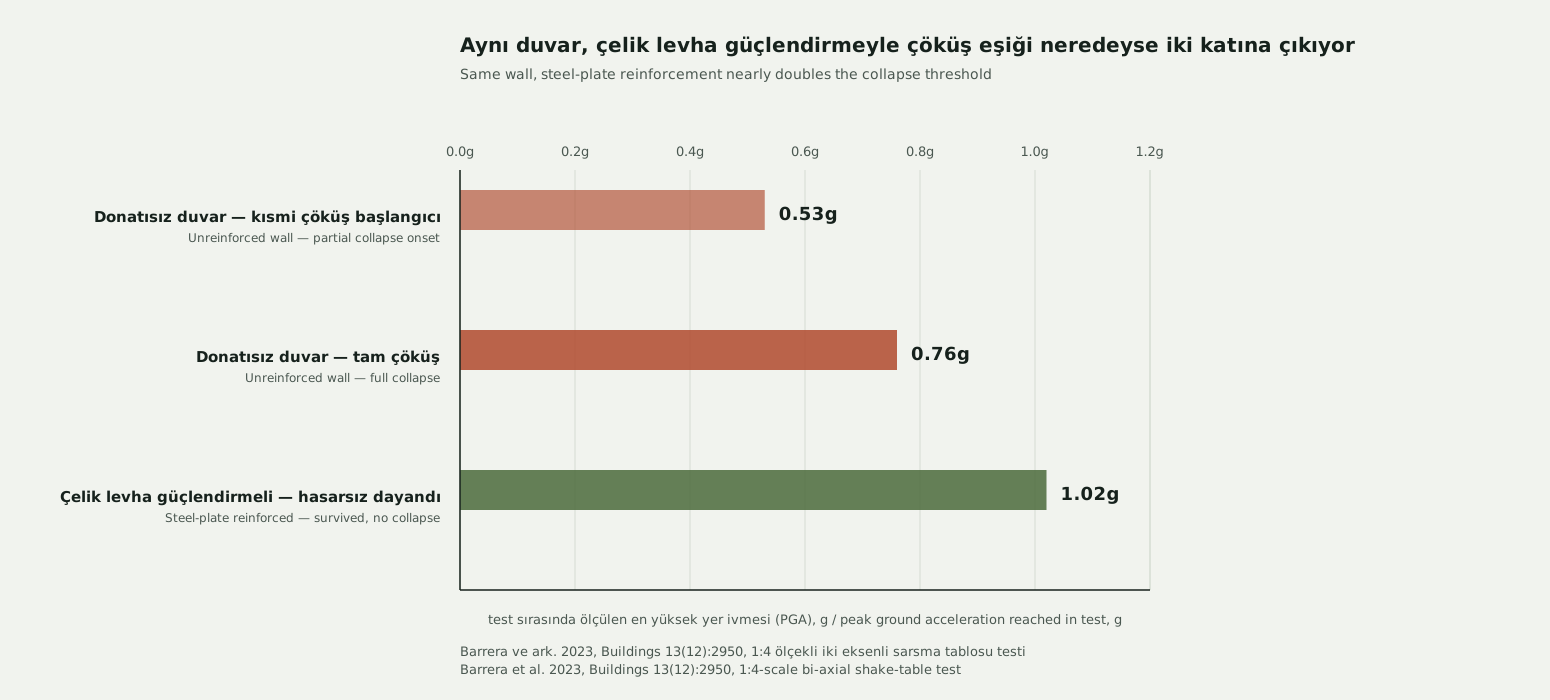
A 2023 shake-table study (Barrera, Ruiz, Reyes, Alvarado & Carrasco-Beltrán, Buildings 13(12):2950) tested a 1:4-scale two-storey rammed earth model on a bi-axial shake table through a six-step sequence of increasing ground motions, comparing an unreinforced wall to a version fitted with steel-plate reinforcement — a technique developed for retrofitting historic rammed earth buildings in the Andean region of northern South America. The unreinforced model showed extensive diagonal and horizontal cracking, entered partial collapse at a peak ground acceleration of 0.53g, and collapsed fully at 0.76g. The steel-plate-reinforced model withstood every one of the six test levels up to 1.02g — the highest intensity tested — with only localized, repairable base cracking and no collapse observed at any stage; failure mode shifted from a sudden shear-dominated mechanism to a more gradual, flexural one. That is roughly a 92% increase in the peak ground acceleration the wall survived, and it is worth stating plainly what this evidence does and doesn't show: it demonstrates that a specific, engineered retrofit technique measurably improves seismic capacity in a controlled scale-model test — not that unreinforced rammed earth is broadly seismic-safe, and not that this exact detailing transfers unmodified to every soil, wall geometry or seismic hazard level.
Soil is not a spec-sheet material#
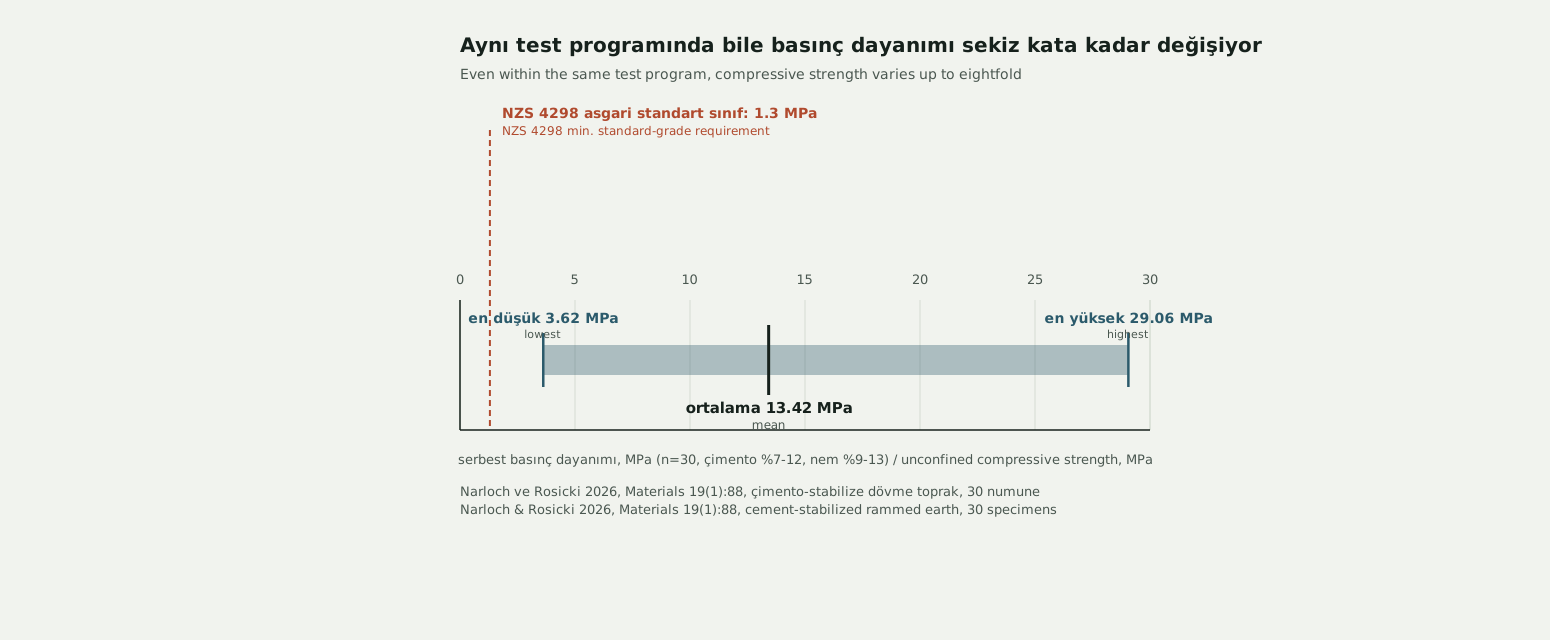
A 2026 peer-reviewed laboratory study (Narloch & Rosicki, Materials 19(1):88) tested 30 cement-stabilized rammed earth specimens across three cement contents (7%, 9%, 12%) and three moisture contents (9%, 11%, 13%), cured 28 days, to isolate whether powdering the soil before mixing — a labor-intensive preparation step — actually affects compressive strength. It found no statistically significant difference between powdered and natural, clod-preserving soil preparation (ANOVA, p>0.05), concluding that the powdering step is unnecessary provided moisture is accurately measured. The more consequential finding, for anyone specifying rammed earth, is the sheer spread of the results themselves: unconfined compressive strength across all 30 specimens ranged from 3.62 MPa to 29.06 MPa — roughly an eightfold spread — with a mean of 13.42 MPa and a standard deviation of ±7.04 MPa, all within a single, controlled test program. That range sits entirely above NZS 4298's 1.3 MPa standard-grade minimum, but its width is the point: a compressive-strength number from one project's soil, cement content and moisture regime does not transfer to another site's soil without its own testing — the same lesson File 20 of this series draws about embodied-carbon databases, applied here to a structural property instead of a carbon one.
Embodied carbon: the material-level case is strong, but check the functional unit#
A 2023 life cycle assessment (Nouri, Safehian & Mir Mohammad Hosseini, International Journal of Building Pathology and Adaptation 41(2)) compared rammed earth to fired clay brick for low-cost housing in Kashan, Iran, and found that replacing fired brick with rammed earth cut CO2 emissions by up to 1,245 kg per ton of material and embodied energy by more than 95%. That is a striking material-level result, and it is consistent with rammed earth's minimal processing — no kiln firing, often little or no cement — compared to fired brick's energy-intensive production. It is also, explicitly, a per-ton material comparison, not a per-square-metre whole-wall or whole-building one: rammed earth walls are typically far thicker than an equivalent fired-brick wall (recall New Mexico's 18-inch/457 mm minimum above), so the actual carbon difference per square metre of finished, code-compliant wall — accounting for both materials' full EN 15978 module scope, per File 20 of this series — would need its own calculation rather than a straight read-across from the per-ton figure.
Türkiye: a standard for adobe, a gap for rammed earth#
Türkiye has a genuine, decades-old standard for earth construction — TS 2515, dated April 1985 — but it governs kerpiç, sun-dried mud-brick masonry, not rammed earth. Its rules are specific: load-bearing exterior kerpiç walls must be at least 40 cm thick (47 cm in the standard's seismic zones), interior load-bearing walls at least 25 cm (30 cm in seismic zones), maximum wall height 2.4 m for 40 cm walls and 2.7 m for 47 cm walls, minimum foundation depth 80 cm, and flat roofs are explicitly prohibited in the standard's "1st and 2nd degree" seismic zones — a zoning language that predates Türkiye's current PGA/response-spectrum-based hazard mapping under TBDY 2018, and is itself a sign of how old this standard is. What TS 2515 does not do is address rammed earth's distinct construction method at all — no compaction, moisture or lift-thickness requirements exist in Turkish standardization for a monolithic, formwork-compacted earth wall, because TS 2515 was written for a masonry technique built from separately dried units.
Modern rammed earth practice does exist in Türkiye — it just operates outside any dedicated code pathway. Rammed Earth Turkey, an İstanbul-based practice affiliated with NKNC Architects, has built a series of custom rammed earth houses and chalets (documented on its own site as an ecological town project, an administrative housing project, and several private residences), and Abdullah Gül University's Architecture Department ran a hands-on "Rammed Earth Workshop | Layer by Layer" at its Kayseri campus in September 2019, drawing 19 students from 12 universities. Neither is a substitute for a code: private practice projects presumably proceed through project-specific structural engineering rather than a prescriptive standard-grade pathway (the NZS 4299 equivalent Türkiye doesn't have), and an educational workshop is exactly that, not a certified or code-tested building. Given Türkiye's seismic hazard and the shake-table evidence above on how much engineered detailing changes a rammed earth wall's survival threshold, that regulatory gap is worth naming plainly rather than glossing over.
This site's own "earth-building" Signal note covers a different technique (compressed earth blocks at 4–8 MPa) and should not be read as covering rammed earth's structural profile — the two are related but distinct, exactly the distinction this file exists to make. Separately, no verified database of code-engineered, seismic-detailed rammed earth buildings in Türkiye was found while researching this file; what exists is private, project-specific practice and educational work, not a track record to cite as evidence of code-equivalent safety at scale.
- No universal rammed earth code exists — ASTM E2392 is an explicit design guide, not a mandatory standard, and defers its own structural values to New Zealand's NZS 4297/4298/4299.
- Compressive strength varied roughly eightfold (3.62–29.06 MPa) within a single controlled test program — a mix design from one project's soil does not transfer to another site without its own testing.
- The 92% seismic-capacity improvement from steel-plate reinforcement comes from one scale-model shake-table study — real evidence for a specific engineered technique, not proof that unreinforced rammed earth is broadly seismic-safe.
- Türkiye's TS 2515 covers kerpiç (adobe block masonry) only — there is no dedicated Turkish standard for rammed earth's monolithic in-situ technique, and existing rammed earth practice in Türkiye operates without a prescriptive code pathway.
None of this argues against rammed earth as a technique — the New Zealand standard shows a rigorous, numeric engineering pathway genuinely exists, the Colombian shake-table research shows engineered seismic detailing measurably works, and the Iranian LCA shows the material-level carbon case is real. What it argues for is precision about which earth-building technique a given number, standard or claim actually describes: rammed earth, adobe/kerpiç and compressed earth block are three different things wearing one loose English phrase, and in a country with Türkiye's seismic hazard and a standard that only covers one of the three, that precision is not pedantic — it is the difference between a wall with a tested design basis and one without.
Open knowledge — CC BY-SA 4.0. Copy it, correct it, cite it.
Related in the library
Share this