Library · Standards · File 22
Low-carbon concrete and geopolymers: the clinker math behind every "green cement" claim
"Low-carbon concrete" describes two very different strategies wearing one label: reducing clinker content within an otherwise ordinary cement — a path with real standards behind it — and replacing clinker entirely with an alkali-activated geopolymer binder, which performs well in testing but still lacks a dedicated structural design code. A peer-reviewed dataset shows geopolymer's own carbon footprint swinging sixfold depending on activator recipe, and Türkiye's clinker ratio sits at 0.94 even as the country remains one of the world's largest cement exporters.
Last reviewed — First publication; figures and claims checked against EN 197-1:2011, EN 197-5:2021, ASTM C595/C595M, ASTM C1157/C1157M, Rossi et al.'s 2023 RILEM Technical Letters review, Almonayea et al.'s 2025 Sustainability study, Davidovits's 2015 technical paper, the January 2024 EBRD-supported Türkiye cement low-carbon pathway analysis, and Ekiz Barış's 2023 Uludağ Üniversitesi study
Ben Koorengevel · Unsplash License
EN 197-1 CEM I: 95-100% clinker · LC3-50: 50% clinker, up to 40% CO2 reduction (RMI) · Almonayea et al. 2025: geopolymer concrete 41-261 kgCO2eq/m³ across 580 mixes, activator type the dominant variable · Türkiye clinker/cement ratio: 0.94 (2022) → target 0.70/0.60 by 2053 · Türkiye: 5th-highest industrial-process CO2 emitter (44.2 Mt, 2021) yet world's largest cement exporter by volume in 2022 (16.9% share)
"Low-carbon concrete" is not one thing. It covers two genuinely different strategies that get marketed under the same phrase: reducing the clinker content within an otherwise conventional Portland-cement-based binder, and replacing clinker entirely with an alkali-activated geopolymer binder that contains none at all. The first path has real standards behind it — cement types with defined clinker ranges, a specific blend now moving toward industrial scale. The second path performs well in laboratory and even full-scale structural testing, but a 2023 review by the international concrete research body RILEM found it still lacks the classification framework, analytical models and standardized test methods a structural design code needs — meaning today's real geopolymer buildings get certified by testing against an existing Portland-cement-based code, not a geopolymer-specific one. Knowing which strategy a given "low-carbon" claim actually describes changes what evidence should back it up.
Where the CO2 in cement actually comes from#
Cement manufacturing produced roughly 1.6 billion tonnes of CO2 in 2022 — about 8% of global emissions, according to the World Economic Forum's 2024 analysis of the sector. Unlike most industrial sectors, where fuel combustion dominates the carbon footprint, cement's emissions are mostly a process emission: heating limestone to roughly 1,450°C to produce clinker — the reactive, energy-intensive core ingredient of ordinary Portland cement — releases CO2 directly from the limestone itself (calcination), independent of what fuel is used to generate the heat. Clinker alone accounts for around 90% of a typical cement's total emissions, and the calcination step accounts for roughly half of emissions in cement production. That single fact explains why almost every genuine low-carbon-cement strategy, whatever else it does, starts with the same lever: reduce how much clinker ends up in the final binder.
The established path: staying with clinker, just less of it#
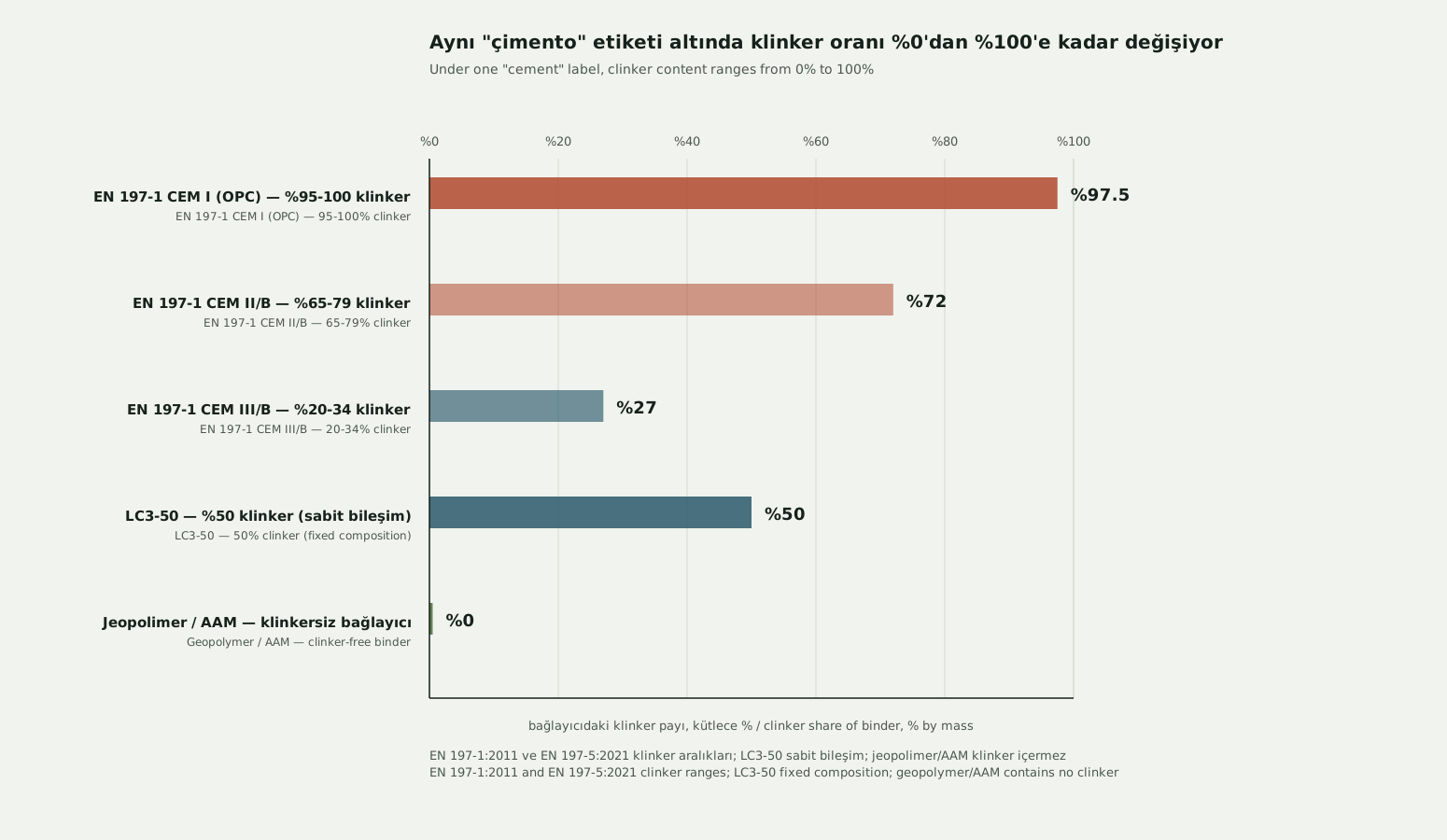
Europe's cement standard, EN 197-1, defines the family of "common cements" by exactly how much clinker they contain: CEM I (ordinary Portland cement) runs 95–100% clinker; CEM II (Portland-composite cement, blended with slag, silica fume, pozzolana, fly ash or limestone) ranges roughly 65–94% depending on subtype; CEM III (blast-furnace cement) drops to 5–64% clinker; CEM IV (pozzolanic cement) and CEM V (composite cement) fall in similar reduced ranges. In the US, the two governing ASTM standards take opposite design philosophies to the same goal: ASTM C595 is prescriptive, setting explicit numeric limits on how much slag, pozzolan or limestone a blended cement may contain (Type IS up to 95% slag, Type IP up to 40% pozzolan, Type IL up to 15% limestone, ternary Type IT up to 70% combined); ASTM C1157 is performance-based, setting no chemical composition requirements at all — only physical performance criteria across six type designations (GU general use, HE high early strength, MS/HS moderate/high sulfate resistance, MH/LH moderate/low heat of hydration) — giving manufacturers latitude to reach a given performance target with whatever clinker-reducing blend actually works, provided it's tested and proven.
Table 1 — Two different standards philosophies for the same clinker problem#
| Standard | Approach / status |
|---|---|
| EN 197-1 (Europe) — CEM I–V | Prescriptive clinker-content ranges by cement type: CEM I 95–100%, down to CEM III/B 20–34%. |
| EN 197-5 (Europe, 2021) — CEM II/C-M, CEM VI | Adds ternary-blend cement types (e.g. LC3-50) but only ternary combinations — and national EN 206 concrete annexes don't all recognize them yet. |
| ASTM C595 (USA) | Prescriptive: explicit numeric SCM limits by blended-cement type (Type IS, IP, IL, IT). |
| ASTM C1157 (USA) | Performance-based: no chemical composition limits, only tested physical performance across six type designations. |
| Geopolymer / AAM (RILEM TC 224-AAM) | No dedicated structural design code yet — Rossi et al. 2023 cite missing classification framework, analytical models, standardized test methods. |
LC3: the calcined-clay blend closest to displacing ordinary Portland cement at scale#
Limestone calcined clay cement (LC3) is the most-cited answer to a real constraint on the older blended-cement strategy: fly ash and slag are industrial byproducts, and their supply is shrinking as coal power plants close and blast furnaces are retired. LC3's standard formulation, LC3-50, replaces roughly half the clinker in ordinary Portland cement with a mix of calcined clay and ground limestone — approximately 50% clinker, 30% calcined clay, 15% limestone, 5% gypsum — using clay, one of the most abundant raw materials on Earth, instead of a byproduct stream that's disappearing. Europe formally recognized ternary blends like LC3-50 under a new cement-type category, CEM II/C-M, in EN 197-5 (May 2021), though the concrete-application standard EN 206 doesn't yet recognize the new cement category in every national annex — a cement-level approval that hasn't fully filtered down to the concrete-design level. In the US, LC3 has no dedicated ASTM designation of its own; it moves through the existing performance-based ASTM C1157 pathway, or the pozzolan-classification limits of ASTM C618. Independent analysis from the sustainability research group RMI cites emissions reductions of up to 40% versus ordinary Portland cement; a 2017 full-scale industrial trial by JK Lakshmi Cement in India measured a real reduction of up to 30%; Ghana's CBI plant is targeting 60–70% clinker replacement; and pilot projects in Cuba report roughly 20% lower material costs alongside the emissions cut.
The zero-clinker path: alkali-activated materials and geopolymers#
Geopolymer concrete — more precisely, an alkali-activated material (AAM) — replaces Portland cement's clinker entirely with an aluminosilicate precursor (typically fly ash, ground granulated blast-furnace slag, or a metakaolin/calcined clay source) activated by an alkaline solution, most often sodium hydroxide, sodium silicate, or a combination of both. RILEM's technical committee on the topic, TC 224-AAM, published a state-of-the-art report establishing the material science base; a 2023 follow-up in RILEM Technical Letters (Rossi et al.) found the underlying research showing AAMs "could meet and even exceed the performance requirements provided by European design standards" in testing — but concluded that practical, widespread structural adoption is still constrained by the absence of a classification framework for the wide range of AAM chemistries, validated analytical models connecting chemistry to mechanical behavior, and standardized test methods that address the raw-material variability inherent to the approach. In practice, that means today's real geopolymer structures get built by testing the specific mix against an existing Portland-cement-based structural code rather than a geopolymer-specific one: the Global Change Institute at the University of Queensland, completed in 2013 and described as the world's first public building using structural geopolymer concrete, used 33 precast geopolymer floor panels (320 m³ total) supplied under the commercial brand Earth Friendly Concrete, with engineer James Aldred of AECOM independently certifying the material's tested performance against Australia's existing concrete structures standard, AS 3600 — not a bespoke geopolymer code, because none existed to certify against.
The activator is where the carbon — and the argument — hides#
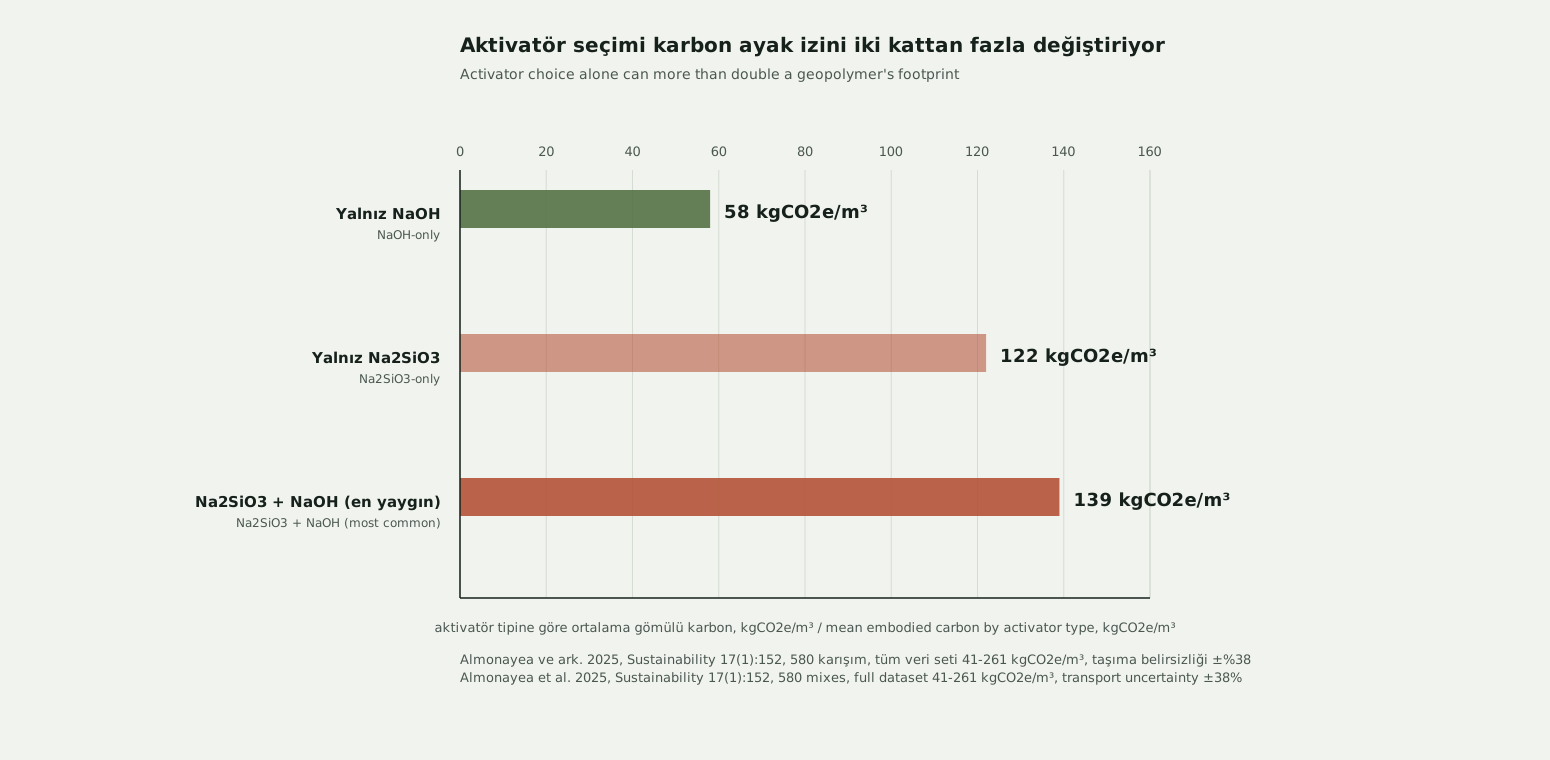
A 2025 probabilistic embodied-carbon assessment (Almonayea, Garcia-Troncoso, Xu & Bompa, Sustainability 17(1):152) analyzed 580 AAM concrete mixes drawn from the published literature and found total embodied carbon ranging from 41 to 261 kgCO2eq/m³ — roughly a sixfold spread — with the alkaline activator itself, not the aluminosilicate precursor, the single largest source of variability, contributing between 3 and 198 kgCO2eq/m³ depending on which activator chemistry was used: mixes combining sodium silicate with sodium hydroxide averaged 139 kgCO2eq/m³, sodium-silicate-only mixes averaged 122, and sodium-hydroxide-only mixes — the cheapest and lowest-carbon activator chemistry, though not always the best performer — averaged just 58. Transport distance added a further ±38% swing on top of that. This is not a settled question even inside the geopolymer research community: a 2015 technical paper by Joseph Davidovits, the researcher credited with coining the term "geopolymer," directly disputed the sodium-silicate emission factors used in two influential earlier LCA studies (Habert et al. and Turner & Collins), arguing one used an emission factor roughly double the correct value for the dilute solution actually used in mixing, and the other applied a factor calculated for 100%-solid sodium silicate glass (1.514 kgCO2eq/kg) directly to a 45%-concentration solution, inflating a corrected per-cubic-metre figure of roughly 45 kgCO2eq/m³ to a reported 156. Davidovits's own genuine reduction estimates — 62–66% for one geopolymer type, 70–80% for a rock-based variant, versus Portland concrete — carry their own explicit caveat: they assume localized production of precursor and activator, and note that current long-distance transport of geopolymer ingredients (over 6,000 km in some cases) could roughly double the real-world footprint. Two different LCA studies, two different sodium-silicate errors, one shared lesson: the activator's own carbon accounting is where a geopolymer CO2 claim is most likely to be wrong, in either direction.
Türkiye: leads in cement exports, lags in clinker reduction#
Türkiye's own clinker-to-cement ratio sat at approximately 0.94 in 2022 — meaning the country's cement is, on average, still very close to a straight, minimally-blended OPC baseline — according to a January 2024 low-carbon pathway analysis prepared for Türkiye's cement sector with EBRD support. The same analysis puts Türkiye's cement process emissions at 44.2 million tonnes of CO2 in 2021, the fifth-highest industrial-process emitter in the world (2.6% of the global total), and lays out two decarbonization scenarios for reaching a clinker ratio of 0.70 by 2053 under a moderate pathway or 0.60 under a more aggressive one. That sits in real tension with Türkiye's position in the global cement trade: the same 2022 baseline year had Türkiye as the world's single largest cement exporter, at 16.9% global market share (29 million tonnes); more recent 2025 trade data puts Türkiye second globally by export value ($1.4 billion, a 9.9% share), behind Vietnam. Türkiye adopts the EN 197-1 cement-type system directly as TS EN 197-1, using the same CEM I–V clinker-range framework covered above rather than a separate domestic standard — but there is no dedicated Turkish structural code for alkali-activated materials or geopolymer concrete, and none of the LC3/calcined-clay deployments cited earlier in this article are in Türkiye.
Genuine geopolymer research does exist in Türkiye, at the laboratory scale. A 2023 study by Kübra Ekiz Barış (Uludağ Üniversitesi Mühendislik Fakültesi Dergisi 28(3)) tested geopolymer binders made from Datça pozzolan combined with waste marble powder — a genuinely local precursor choice, since Türkiye is one of the world's largest marble producers and generates substantial marble-processing waste — across five pozzolan-to-marble-powder ratios. The best-performing mix, 75% pozzolan to 25% waste marble powder, reached 15.71 MPa at 28 days, meaningfully above the 12.42 MPa control (100% pozzolan, no marble powder); ratios beyond 25% marble powder saw declining strength, attributed to insufficient silica and alumina content for effective alkali activation. This is real, locally-relevant materials science — but it is lab-scale mortar testing, not a structural building, a certified product, or a pathway with any Turkish code behind it yet.
Both major established SCM strategies (traditional fly-ash/slag blends and much of today's geopolymer chemistry) draw on the same shrinking industrial-byproduct pool: fly ash supply is genuinely declining as coal power plants close, with one documented US regional case (Illinois) removing roughly 80,000 tons a year of fly ash from the local market after a set of plant closures, described by industry press as signaling that "the days of having an affordable, reliable source of fly ash are nearly over." Calcined clay, LC3's own precursor, is being developed partly as a direct response to exactly this constraint — a supply-independent, abundant raw material rather than a byproduct stream in structural decline.
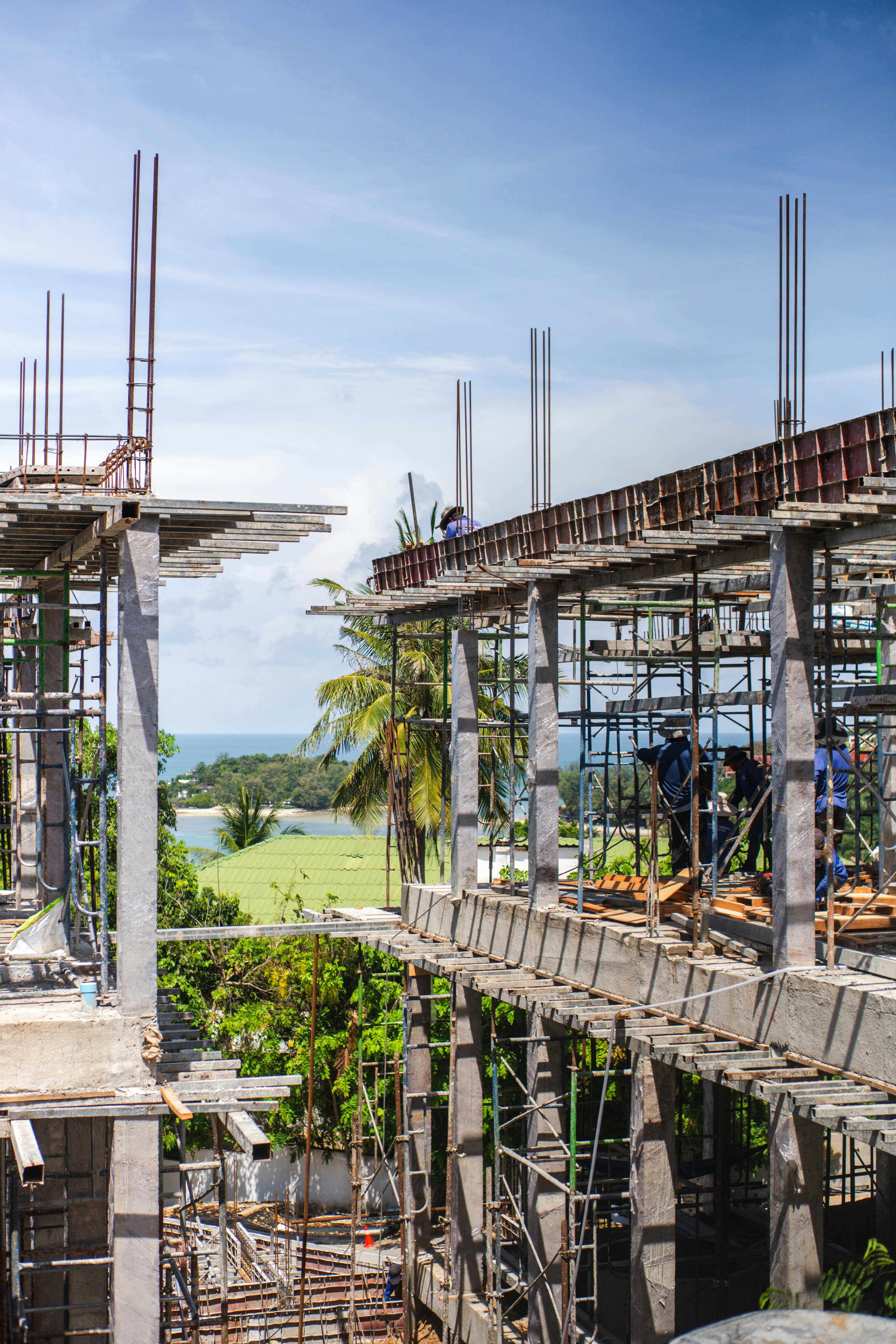
- "Low-carbon concrete" covers two different strategies — reduced-clinker blended cement (standards exist) and clinker-free geopolymer/AAM binders (no structural design code yet) — and a given claim should specify which one it means.
- Geopolymer embodied carbon varied roughly sixfold (41–261 kgCO2eq/m³) across 580 real mixes, driven mainly by activator chemistry, not the geopolymer concept itself — a specific product's number needs its own testing, not a genre-wide average.
- Even inside the geopolymer research literature, published LCA studies have disagreed — in both directions — over how to correctly account for the activator's own embodied carbon, with two separate documented sodium-silicate emission-factor errors.
- Türkiye is simultaneously one of the world's largest cement exporters and a country whose clinker ratio (0.94 in 2022) sits close to the OPC baseline — with no domestic LC3 deployment and no structural code for geopolymer/AAM yet.
None of this argues against either strategy. LC3 has real deployment data behind its clinker-reduction claims, and a growing set of national and European standards to build on; geopolymer concrete has already been engineered into a real, occupied public building, certified against a real structural code, using real independent testing. What it argues for is the same precision this series keeps returning to: a clinker-content number, a CO2 percentage, and a structural code reference describe three different, checkable things, and a genuinely low-carbon concrete claim should be able to name all three rather than leaning on the phrase alone.
Open knowledge — CC BY-SA 4.0. Copy it, correct it, cite it.
Related in the library
Share this