Library · Standards · File 12
BIPV: what "building-integrated" actually requires, and what colour really costs
A BIPV module replaces a roof or facade component and has to pass every test that component would — a different, stricter bar than a rack-mounted panel. What well-engineered colour and pattern options actually cost in efficiency, and what a Turkish field study measured about orientation instead.
Last reviewed — First publication; figures checked against the IEA-PVPS T15-08:2019 BIPV requirements report, UL Solutions' BIPV/UL 7103 certification documentation, Fraunhofer ISE's MorphoColor press materials, Megasol Solarcolor Morpho published specifications, a 2025 patterned-glass BIPV field study, Demir & Aktacir's 2023 Şanlıurfa BIPV field study (MDPI Applied Sciences 13(20):11286), and TSE's published adoption of TS EN 61730 / TS EN 61215
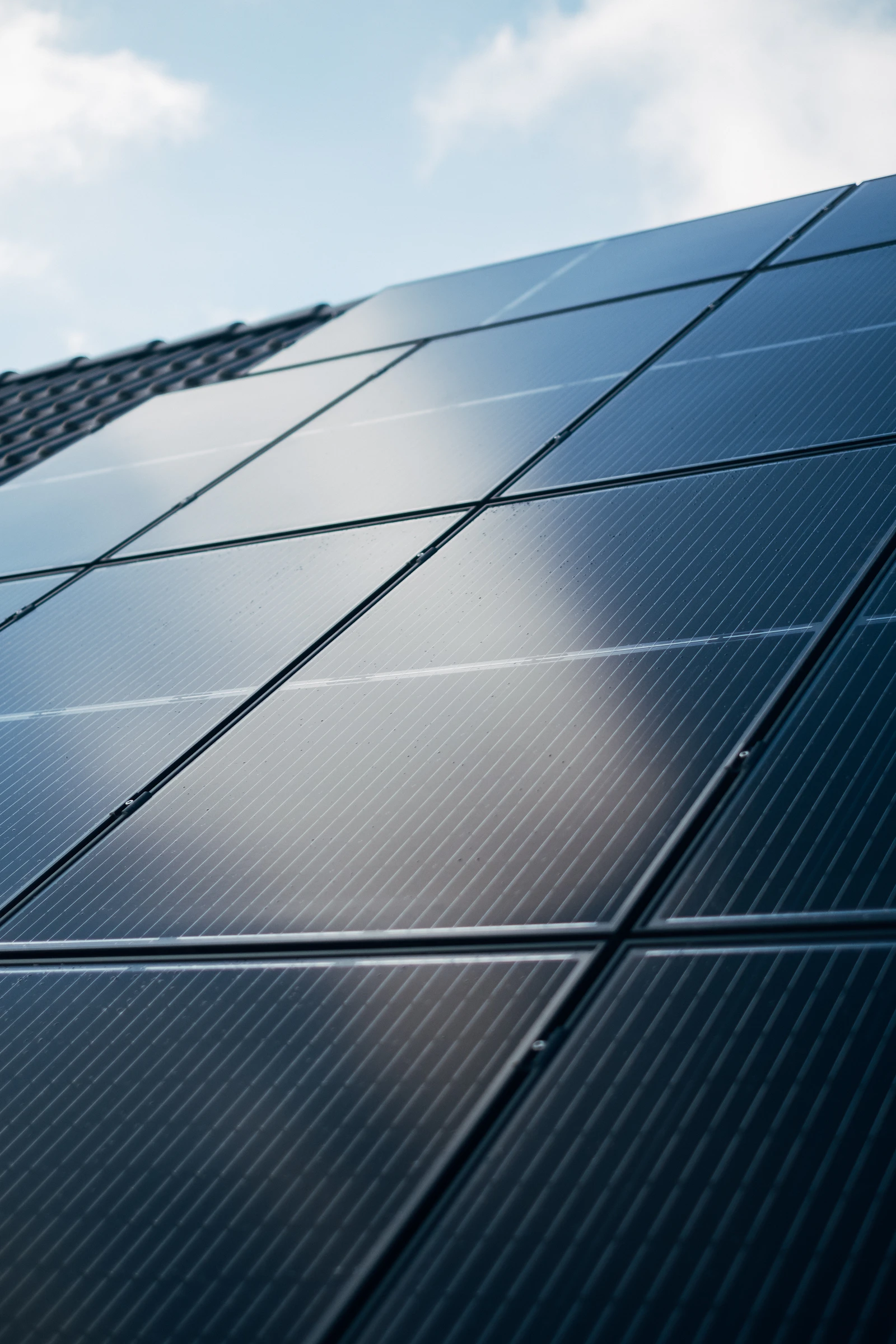
Benjamin Jopen · Unsplash License
Colour/pattern efficiency retention: patterned glass 99.5% · Megasol Solarcolor Morpho 94% · Fraunhofer MorphoColor min. 90% · Şanlıurfa annual yield: roof 505.64 kWh vs. east facade 313.34 kWh (38% spread)
The term "BIPV" gets used loosely for almost any solar panel that looks architectural, and the loose usage erases the one distinction that actually matters. IEA-PVPS's technical definition is precise: a BIPV module is "a PV module and a construction product together, designed to be a component of the building" — it replaces a roof tile, a facade panel or a skylight rather than sitting on top of one. A panel racked above a finished roof is BAPV — building-attached photovoltaics — and it is tested and coded differently, because a BAPV module never has to keep water, wind or fire out of the building on its own. A BIPV module does.
Why the distinction changes which standard applies#
IEC 61730 governs PV module electrical and mechanical safety — shock prevention, fire hazards, environmental stress — for both BIPV and BAPV modules alike. IEC 61215 is different: it is a design-qualification standard for long-term mechanical stability, and the IEA-PVPS report is explicit that IEC 61215 qualification is a quality characteristic "with regard to the module's long-term mechanical stability for non-BIPV applications, i.e. ground-based or rooftop BAPV" — it was not written with a weatherproofing, structural or fire-separation role in mind. In the US, the 2021 International Building Code and International Residential Code closed that gap directly: BIPV roofing systems must now be listed and labeled to UL 7103, a standard that consolidates electrical, fire, wind-resistance, weather-protection and impact-resistance testing into one certification specifically because a BIPV roof has to pass every test a conventional roof covering passes, in addition to every test a PV module passes.
Table 1 — BIPV and BAPV compared#
| BIPV | BAPV | |
|---|---|---|
| Function | Replaces a building envelope component | Mounted onto a finished envelope |
| Must weatherproof the building? | Yes | No — the roof/wall already does |
| Governing standard (US) | UL 7103 (roofing) + UL 61730 | UL 61730 + IEC 61215 |
| Removable without envelope damage? | No | Yes |
The colour tradeoff, measured precisely#
Architects want colour and pattern options, and the efficiency cost of that is smaller than most marketing copy implies — though it is not zero, and the exact number depends entirely on the coating technology. Fraunhofer ISE's MorphoColor® uses a photonic interference structure, inspired by the way morpho butterfly wings produce colour without pigment, that reflects only a narrow spectral band while letting most sunlight reach the cells underneath; Fraunhofer states this delivers "at least 90 percent of the electricity yield of an ordinary module," and Megasol's commercial Solarcolor Morpho product reports 94% of a conventional black module's efficiency. A separate 2025 field study of a different approach — patterned structural glass rather than a colour-interference coating — measured only a 0.5% energy-yield difference against a reference module over two months of outdoor testing in Korean summer conditions, with the power difference at standard test conditions just 0.4%. The consistent finding across both approaches: a well-engineered colour or pattern treatment costs low single digits to low double digits of efficiency, not the 30–50% figure people often assume from looking at a tinted sample.
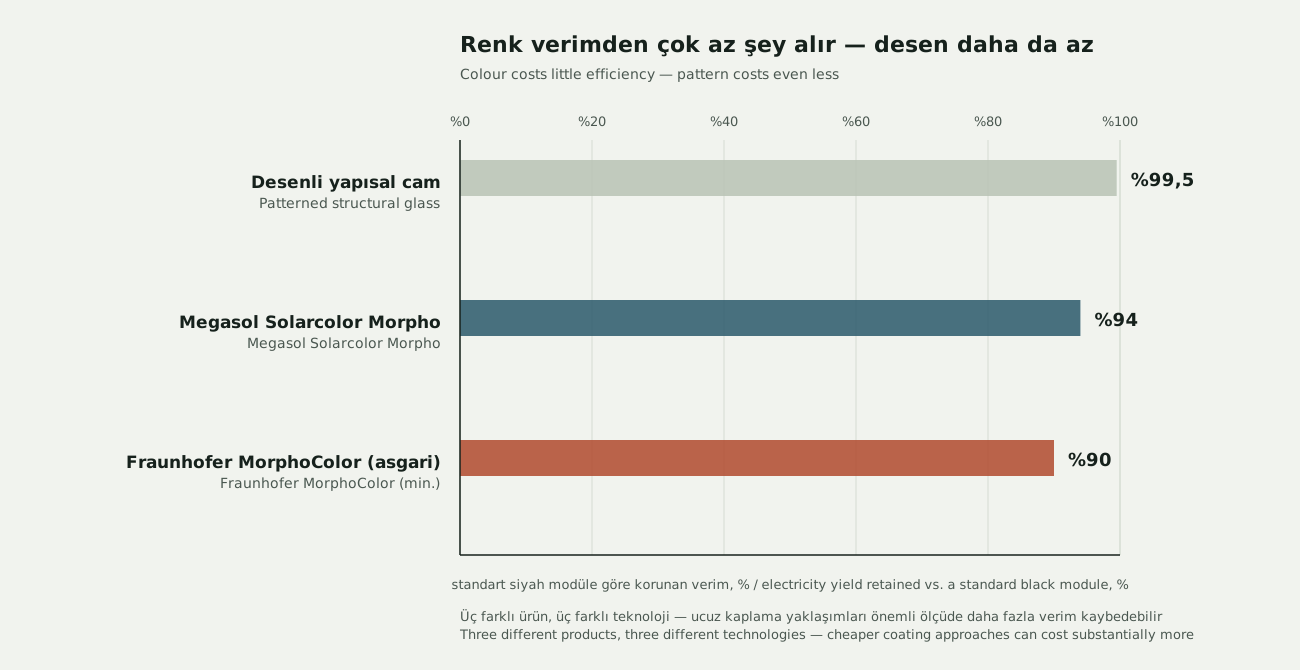
How to read it: colouring a module is not the same problem as making it see-through. A colour coating filters a narrow part of the spectrum while keeping the full cell area active; true transparency requires physically removing cell material or spacing cells apart, which trades away active area directly and roughly proportionally — a glass-glass module built for 30% visible-light transmission gives up roughly that share of its potential output, a genuinely different and much steeper tradeoff than tinting.
Türkiye's own field measurement: orientation costs more than colour#
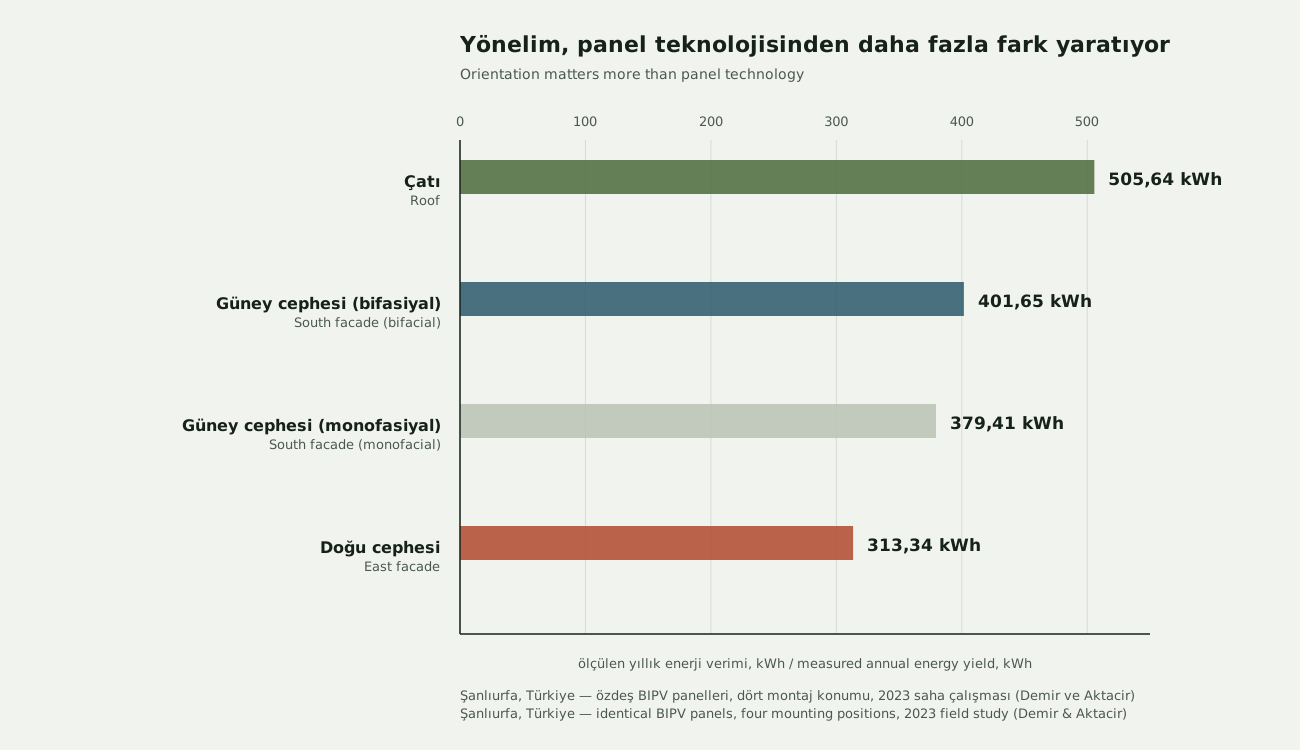
A 2023 experimental study by Demir and Aktacir tested identical BIPV panels — bifacial and monofacial — mounted on the roof, south facade and east facade of a test structure in Şanlıurfa, a high-sunshine region in south-eastern Türkiye with roughly 3,055 annual sunshine hours. Over six months of measurement plus a full-year PVsyst simulation, the roof installation produced the most energy of any configuration; bifacial panels consistently outperformed monofacial panels at every position because their reflective backing captures diffuse and reflected light the front-facing cells miss, with the gap reaching 15.1% over the measured period and 5.86% in the annual simulation. The practical implication for anyone weighing a facade BIPV installation against a roof one in a similarly sunny climate: orientation and mounting position moved the annual energy yield by a wider margin than any colour or pattern choice does — facade BIPV is a legitimate secondary yield strategy, not a substitute for roof-level generation where roof area is available.
- Cost and installation complexity remain real barriers: a BIPV element has to satisfy building-envelope requirements and electrical requirements simultaneously, which typically means more custom engineering than a standardized rack-mounted BAPV panel, even before counting any colour or transparency premium.
- Standards remain fragmented across jurisdictions: the US ties BIPV roofing specifically to UL 7103 through the 2021 IBC/IRC, while IEC 61730 alone — the standard both BIPV and BAPV modules share — was not written with roofing weatherproofing or fire-separation performance in mind, leaving a gap that individual national codes fill inconsistently.
- The efficiency numbers above are best-case, well-engineered products (MorphoColor, patterned structural glass): cheaper colouring approaches on the market can cost substantially more efficiency, so a specific product's own third-party test data — not a category average — is what should govern a specification decision.
- The publisher's own panel systems carry the same caveat as any BAPV or hybrid mounting approach: a solar-ready roof panel is not automatically a certified BIPV roofing product, and specifying one as such without the relevant listing (UL 7103 in US jurisdictions, or the applicable local equivalent) would misrepresent what the product has actually been tested to do.
IEC 61730 module-safety certification is necessary for any PV module, BIPV or BAPV — but it is not sufficient by itself to call a product a certified BIPV roofing system. In US jurisdictions since the 2021 IBC/IRC, that additional listing is UL 7103; elsewhere, confirm what the local building code actually requires before treating "IEC 61730-certified" as equivalent to "approved as a roof covering."
Türkiye: the module standards exist, the BIPV-specific product standard does not#
Türkiye's standards body, TSE, has adopted the core IEC PV module standards as national standards under their original numbering — TS EN 61730 for module safety and TS EN 61215 for design qualification — so a PV module sold in Türkiye is certified against the same electrical and mechanical safety baseline used internationally. What does not yet exist is a Turkish equivalent of UL 7103: a dedicated product standard for BIPV specifically as a roof covering or facade element, tested against local wind, fire and weatherproofing requirements the way the US market now requires. This is the same pattern this series has documented before in File 05 (SIP panels) and File 09 (green roofs) — the generic underlying standard is adopted and enforced, but the more specific, integration-level product standard that a mainstream building code would reference has not yet been written domestically.
The Şanlıurfa study is itself a small, encouraging counter-data-point: Turkish universities are already generating the kind of location-specific field performance data — not just adopting foreign lab standards on paper — that a future domestic BIPV product standard would eventually need to draw on. Şanlıurfa's roof-beats-facade, bifacial-beats-monofacial findings are specific to that region's high direct-irradiance, semi-arid conditions and should not be assumed to generalize unchanged to, say, a cloudier Black Sea coastal climate — but the study demonstrates the kind of climate-specific measurement this technology needs more of before a Turkish BIPV product standard could responsibly set performance thresholds the way UL 7103 does for US wind zones.
None of this argues against BIPV — including in the publisher's own modular systems, where a factory-integrated PV roof panel is a genuinely plausible product line precisely because panelized manufacturing already solves the tight tolerances a BIPV weatherproofing seal requires. The point is narrower and more useful: a colour or pattern choice on a BIPV product costs single-to-low-double-digit percentage points of efficiency when well engineered, an order of magnitude less than most people assume — while orientation and mounting position, as Şanlıurfa's own measurements show, remain the variable that actually moves the annual energy number the most.
Open knowledge — CC BY-SA 4.0. Copy it, correct it, cite it.
Related in the library
Share this