
Library · Standards · File 04
Modular building systems: the difference between volumetric, panelized and hybrid
Factory completion percentage, not the word "modular", is what actually separates these systems — and Türkiye's post-earthquake container cities show what off-site construction can do at national scale, and where it still struggles.
Last reviewed — First publication; figures checked against ICC/MBI 1200-2021, a 2025 peer-reviewed review (Buildings 15(12)), MBI's 2025 industry analysis, and Türkiye's 2025 earthquake reconstruction report
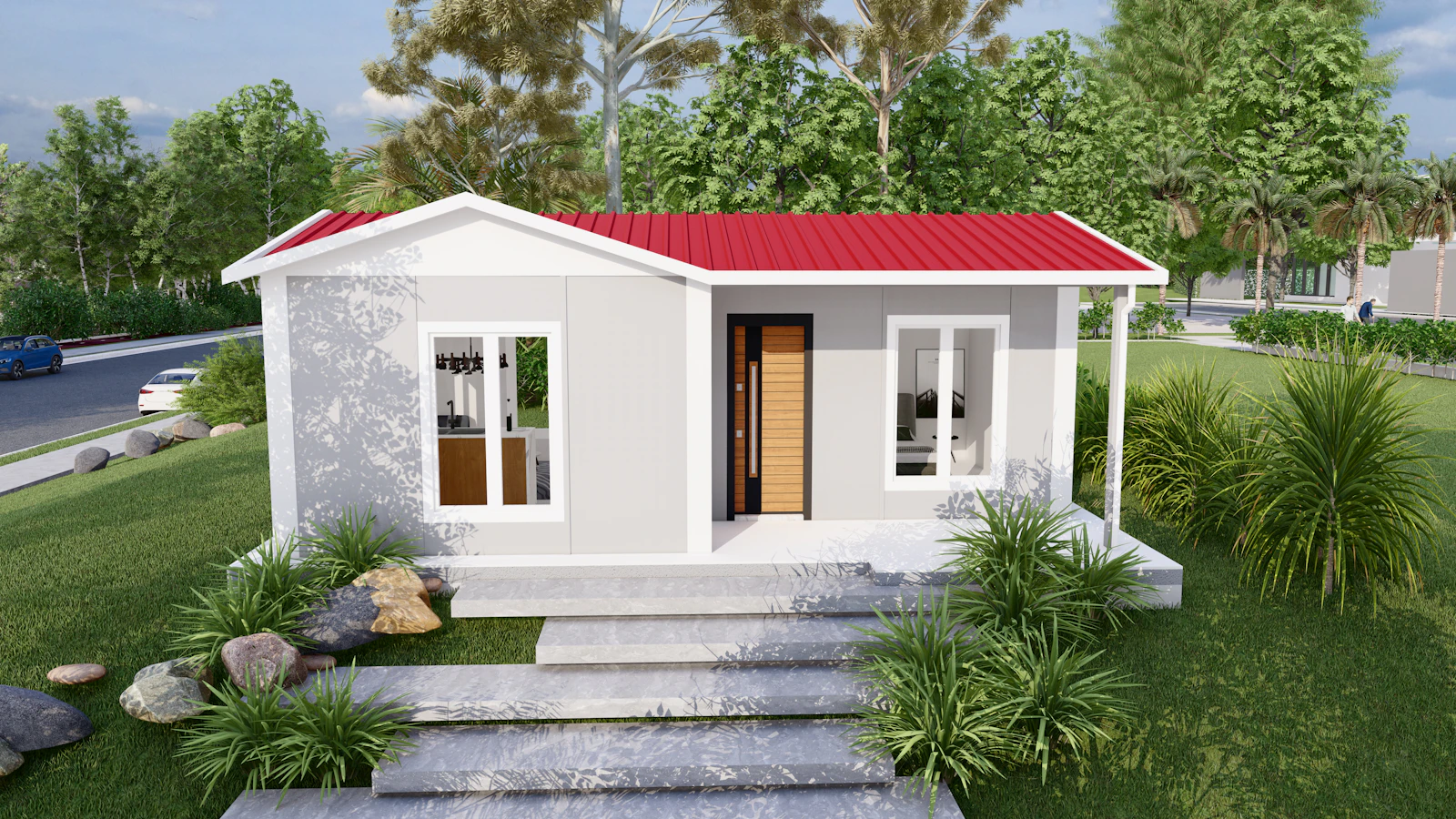
Adnan Kahveci · Unsplash License
Volumetric modular: up to ~24% reported cost reduction · Türkiye post-earthquake: 214,000 container units, 650,000 people housed
"Modular" gets used for almost anything built off-site, from a single wall panel to a fully finished hotel room craned into place with the curtains already hung. The word does not distinguish between these, but the construction industry has three working categories that do: volumetric (3D) modules, panelized (2D) systems, and hybrids that combine both. What separates them is not appearance but a measurable number — the share of the building's total value completed inside a factory before it ever reaches the site.
Three categories, one metric: factory completion share#
Volumetric (3D) modules are fully enclosed three-dimensional units — complete rooms or room clusters with structure, envelope, and often finishes and fixtures already installed — craned onto a foundation or stacked onto other modules. Panelized (2D) systems are flat wall, floor and roof cassettes assembled into a three-dimensional building on site; they travel more efficiently on a truck but need more site labour to close up. Hybrid systems use volumetric modules for repetitive spaces — bathrooms, bedrooms — and panelized or conventional construction for everything else, trading some factory efficiency for design flexibility.
Table 1 — Modular system types at a glance#
| Type | Typical factory completion | Best suited to |
|---|---|---|
| Volumetric (3D) | up to ~70% | Repetitive units: hotels, student housing, multifamily |
| Panelized (2D) | up to ~70% (by element) | Custom layouts, low-rise, renovation-adjacent work |
| Hybrid | Mixed | Buildings with both repetitive and unique spaces |
How to read it: "up to 70%" is the ceiling both systems' advocates cite for factory-completed value, not a guarantee — the actual share depends on how much site work a specific design still requires for services, finishes and inter-module connections.
What actually sets the geometry: transport#
A volumetric module's maximum size is rarely set by the factory — it is set by the road network between the factory and the site. Over-width and over-height loads require special transport permits and often a police or pilot-vehicle escort in most jurisdictions, and the practical width a manufacturer can reliably move without one becomes the ceiling for room dimensions across an entire product line. This is why volumetric modular buildings so often show a repeated, corridor-plus-room-box rhythm in plan: the module width is a transport decision made before it is an architectural one.
TRANSPORT PERMIT THRESHOLDS ARE NOT UNIVERSAL. Legal width, height and escort thresholds are set by national and even regional road authorities and vary widely — a module that travels freely in one country may require a full route survey and police escort in another. There is no single global number to design to.
What factory control actually means: ICC/MBI 1200#
The most widely referenced offsite-construction standard, ICC/MBI 1200, does not certify a building's energy performance or its architecture — it standardises the process: how a factory's quality-control programme is documented, how modules are inspected before and after transport, and how the on-site connections between them are verified once assembled. A factory-built module inspected to this standard has been checked more times, by more parties, than most components of a conventionally built wall ever are — which is the actual argument for factory quality, not the word "modular" itself.

What the numbers say: schedule and cost#
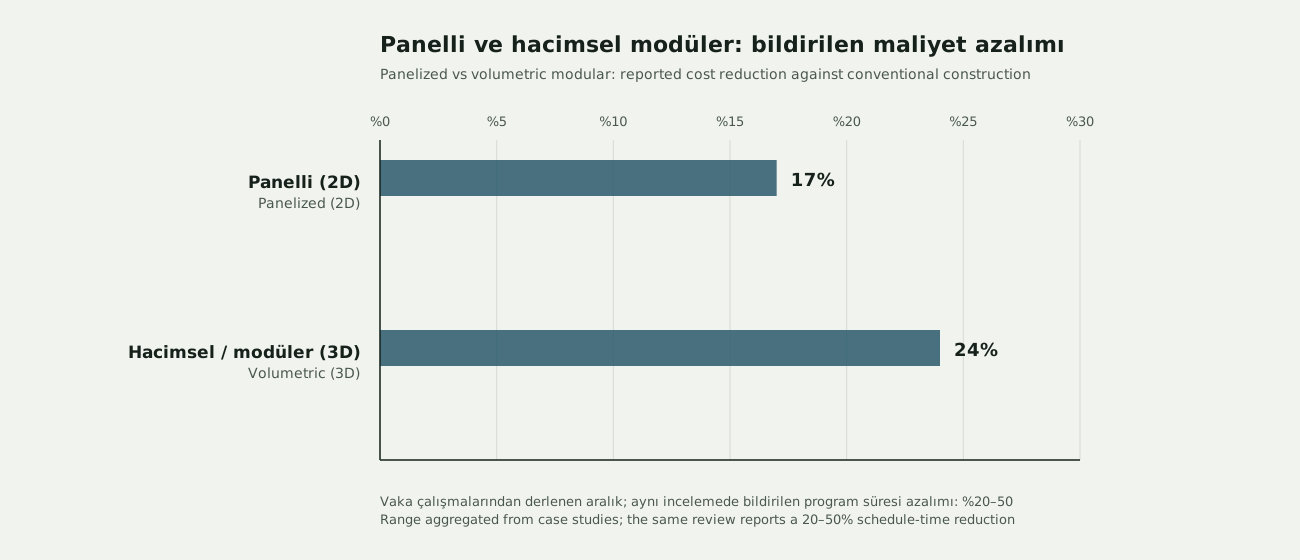
A 2025 peer-reviewed review aggregating multiple case studies reports schedule reductions of 20–50% for modular projects against conventional construction, with panelized systems showing roughly 17% cost savings and volumetric systems roughly 24%, alongside waste-reduction figures as high as 83% on individual projects. These are aggregated best-case ranges from published case studies, not a guarantee for any specific project — the same review notes that inter-modular structural connections remain a distinct source of risk, particularly bolted connections under cyclic or seismic loading, where bearing buildup, slippage and alignment tolerance stack up in ways a conventional frame does not experience.
Türkiye: 214,000 units in two years#
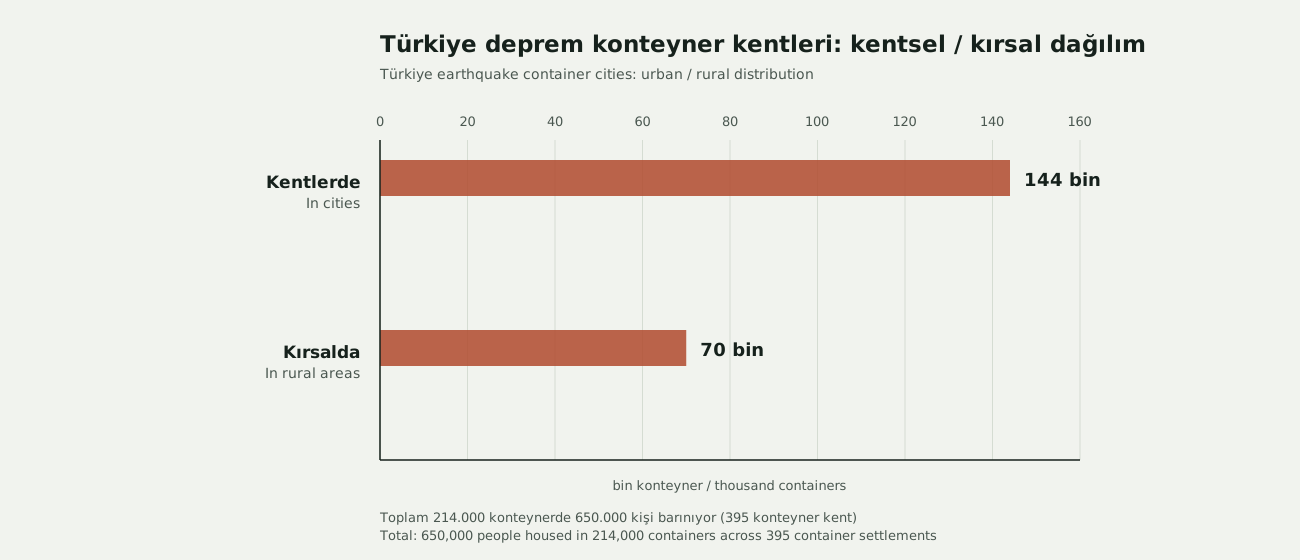
Türkiye's most visible demonstration of off-site construction at scale was not a permanent modular building programme — it was the emergency response to the February 2023 Kahramanmaraş and Hatay earthquakes. As tent cities were phased out, the government's own reconstruction report counts 395 container settlements housing 650,000 people in roughly 214,000 relocatable container units, split by the same report into about 144,000 units in urban areas and 70,000 in rural ones. These are relocatable buildings in the ICC/MBI sense, not permanent modular construction — but producing and deploying that volume in a matter of months demonstrated a national manufacturing and logistics capacity that a purely architectural reading of "modular" would miss.
The government also cut VAT on prefabricated structures and containers from 18% to 1% to accelerate the response, and separately began financing roughly 8,500 permanent rural houses using lightweight steel and reinforced-concrete systems, with about 9.5 billion lira spent by the end of 2024. What the report does not resolve is the harder question: how much of this emergency manufacturing capacity converts into a durable permanent modular housing sector once the reconstruction programme winds down, versus reverting to relocatable-unit production for the next emergency.
Where modular construction genuinely struggles#
- Financing and insurance: many lenders and insurers still underwrite off-site construction differently from site-built work, sometimes requiring milestone payments tied to factory completion that conventional construction financing does not.
- Design flexibility: repetitive module geometry that makes factory production efficient is the same geometry that limits late design changes — a change after fabrication starts is far more disruptive than on a conventional site.
- Inter-module connections: the joints between modules — structural, thermal and weatherproofing — are assembled on site under normal site conditions, which is exactly where a factory's quality advantage stops applying.
- Transport economics: beyond a certain distance, the cost of moving a large, mostly-empty three-dimensional box outweighs the factory savings — which is why volumetric modular is geographically clustered around factories, not evenly distributed.
None of this is an argument against modular or panelized systems — including the SIP-based systems this publisher works with, which are panelized rather than volumetric and inherit the same joint-quality dependency described above. It is an argument for treating "modular" as a manufacturing method with specific, checkable claims — factory completion share, the standard a module was inspected to, the connection detail at every joint — rather than as a performance guarantee in itself.
The most useful question to ask about any modular claim is not "is it modular?" but "how much of it was actually built before the truck arrived, and how was the rest verified?" — the first question has a marketing answer; the second has a checkable one.
Open knowledge — CC BY-SA 4.0. Copy it, correct it, cite it.
Related in the library
Share this