Library · Standards · File 16
Natural insulation: what the lab measures behind the marketing
Sheep wool, cellulose, wood fibre and hemp are real, standards-backed insulation materials — but independent lab data shows fire class, embodied carbon and moisture performance vary far more than the word "natural" suggests, and durability usually comes from an added borate treatment, not the fibre alone.
Last reviewed — First publication; figures checked against EN 13171:2012 and STEICO's own STEICOtherm technical data sheet, Fiedler & Pedersen's 2025 Materials study measuring hemp insulation thermal conductivity, Zerari, Franchino & Pisacane's 2024 E3S Web of Conferences embodied-carbon comparison across European countries, Ruiu & Floris's 2019 Insects study of borate-treated wool panels against clothes-moth larvae, De Ligne et al.'s 2022 Frontiers in Plant Science moisture-uptake study of wood-fibre boards, Şen & Çınar's 2025 Gazi Üniversitesi study of sheep-wool/wood-chip composite boards, Türkiye's revised TS 825:2024 thermal insulation standard, and U.S. Borax's published data on borate fire-retardant treatment of cellulose insulation
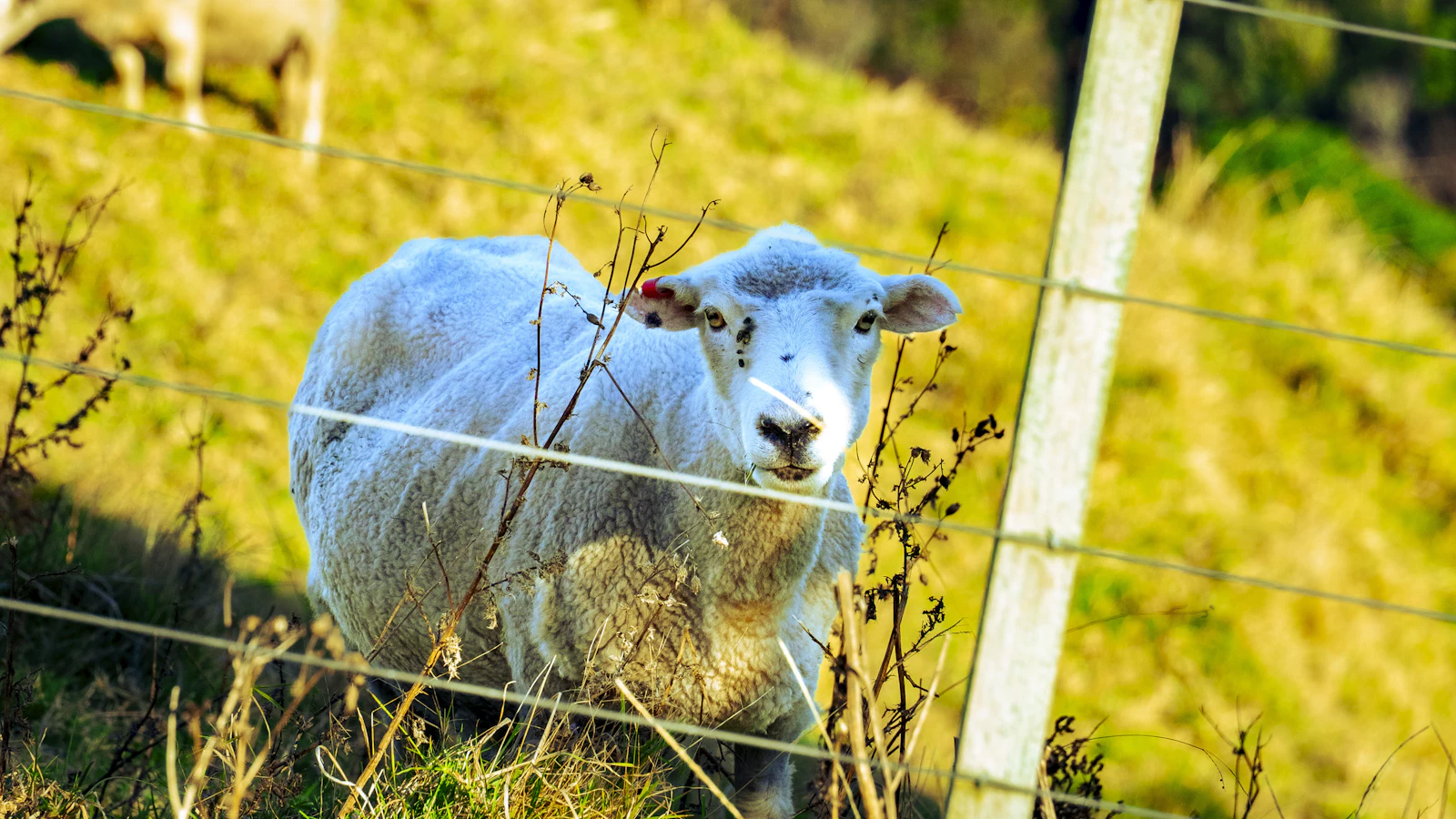
Mario Amé · Unsplash License
Thermal conductivity: glass wool 0.032 W/mK, wood fibre (declared) 0.038 W/mK, hemp (measured) 0.055–0.065 W/mK · Wood fibre fire class: E (EN 13501-1) vs. mineral wool A1/A2 · Embodied carbon range: cellulose 0.38–23.95, wood wool 10.40–111.60 kgCO2e/m² (R=2.5, 60yr) across 7 EU countries · TS 825:2024 took effect 1 April 2025, now covers heating and cooling
"Natural insulation" usually means one of four fibrous materials: sheep wool, cellulose (recycled newsprint), wood fibre, or hemp fibre — flexible batts or rigid boards that go into a wall, roof or floor cavity the same way mineral wool or foam does. That is a different material category from hempcrete (File 11 of this series), which is a monolithic lime-hemp infill cast around a structural frame rather than a manufactured batt or board. The four fibrous materials share a real, useful case: they are bio-based, often carry genuine third-party test data, and several have been manufactured at commercial scale for decades. They do not share a single performance number, and the marketing shorthand — "natural," "breathable," "low-carbon" — collapses distinctions a lab report keeps separate. This file works through what independent measurement actually shows for thermal performance, fire class, embodied carbon and moisture behaviour, and where a genuinely natural material still needs a synthetic chemical additive to meet a real-world durability requirement.
What a declared number and a measured one don't agree on#
Wood fibre board is the closest of the four to a conventional insulation product: it is covered by its own EN 13171 product standard, and a representative rigid board (STEICOtherm) carries a declared thermal conductivity of 0.038 W/mK at a density of about 160 kg/m³, fire class E to EN 13501-1, and a vapour diffusion resistance factor (µ) of 5 — diffusion-open enough to be used without a separate vapour barrier in the right assembly. That declared number sits close to mineral wool. Hemp fibre tells a different story. A 2025 peer-reviewed study (Fiedler & Pedersen, Materials 18(8):1723) independently measured thermal conductivity across several commercial hemp insulation products and found 0.055–0.065 W/mK — compared with 0.032 W/mK for glass wool and 0.035 W/mK for polystyrene measured in the same study. That is roughly double the conductivity of the conventional materials it is often marketed as an alternative to. The authors' own framing is exactly right: the same thermal resistance can still be achieved with hemp, it just needs proportionally more thickness — a real, quantifiable trade-off, not a disqualifying one, but one that a bag of hemp batt marketed as a straightforward mineral-wool swap does not disclose.
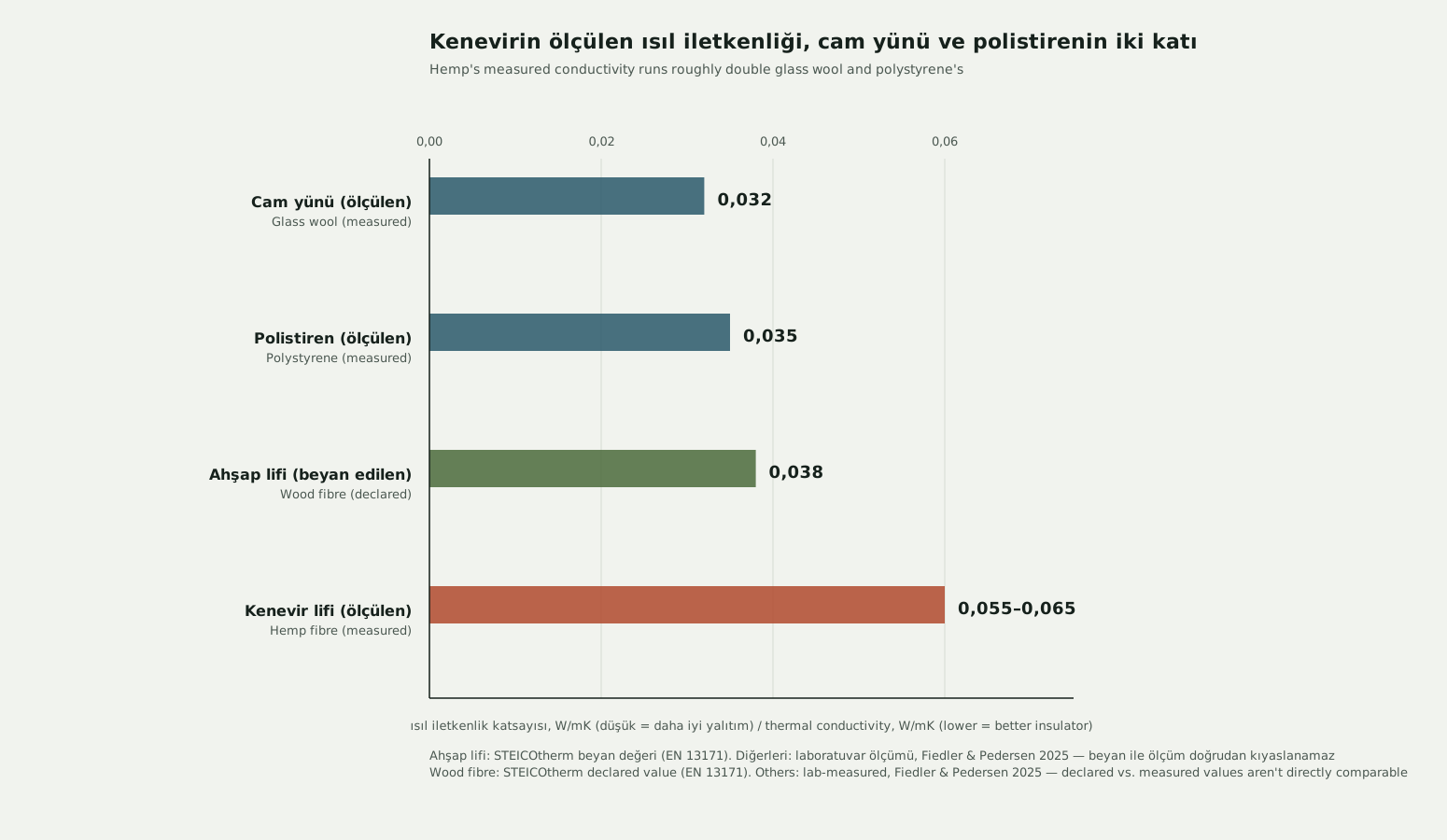
The honest way to read Figure 1 is not "hemp is a worse insulator than wood fibre" — the wood-fibre number is the manufacturer's own declared value, tested and stated under EN 13171's own procedure, while the other three are an independent lab's measurements of what commercial products actually did on a hot-plate apparatus. Declared values are not fabricated, but they are also not always the same test conditions, sample age or moisture state a third-party lab will use. The useful discipline, for any of these four materials, is the same one this series has applied to SIP framing factors (File 05) and shipping-container thermal retrofits (File 15): treat a manufacturer's headline number as a starting point to verify, not a number to specify from directly.
Fire class: the gap the bag doesn't print#
This is the trade-off natural-insulation marketing is quietest about. STEICOtherm's own technical data sheet states its EN 13501-1 fire classification as Class E — the second-lowest reaction-to-fire class on the European scale, ahead only of F (no performance determined). Mineral and glass wool routinely achieve A1 or A2 (non-combustible or nearly so) in the same system. That is not a defect specific to one product; it is close to typical for untreated wood-based insulation, because the material is, chemically, wood. Cellulose insulation closes part of that gap chemically rather than structurally: US Borax, the dominant supplier of the borate compounds used across the industry, states that cellulose manufacturers commonly add borate salts (boric acid/Optibor or borax/Neobor) at roughly 10–20% by weight specifically because they suppress both flaming and smouldering combustion — the two fire modes a purely cellulosic fibre does not resist on its own, tested against US industry standards including ASTM C739. The pattern across all four materials is consistent: the base fibre is what makes the material "natural," and a chemical treatment, not the fibre itself, is usually what makes it survive a real fire-safety test.
Table 1 — Four fibrous natural insulation materials#
| Material | Typical form | Key standard / treatment |
|---|---|---|
| Sheep wool | Flexible batt or blanket | No dedicated EN product standard; borate (DOT) moth-proofing common |
| Cellulose | Loose-fill or dense-pack | ASTM C739 (US); 10–20% borate by weight for fire/pest resistance |
| Wood fibre | Rigid board or flexible batt | EN 13171; fire class typically E to EN 13501-1 |
| Hemp fibre | Flexible batt | No dedicated EN product standard; conductivity varies by supplier |
Embodied carbon: not a fixed number#
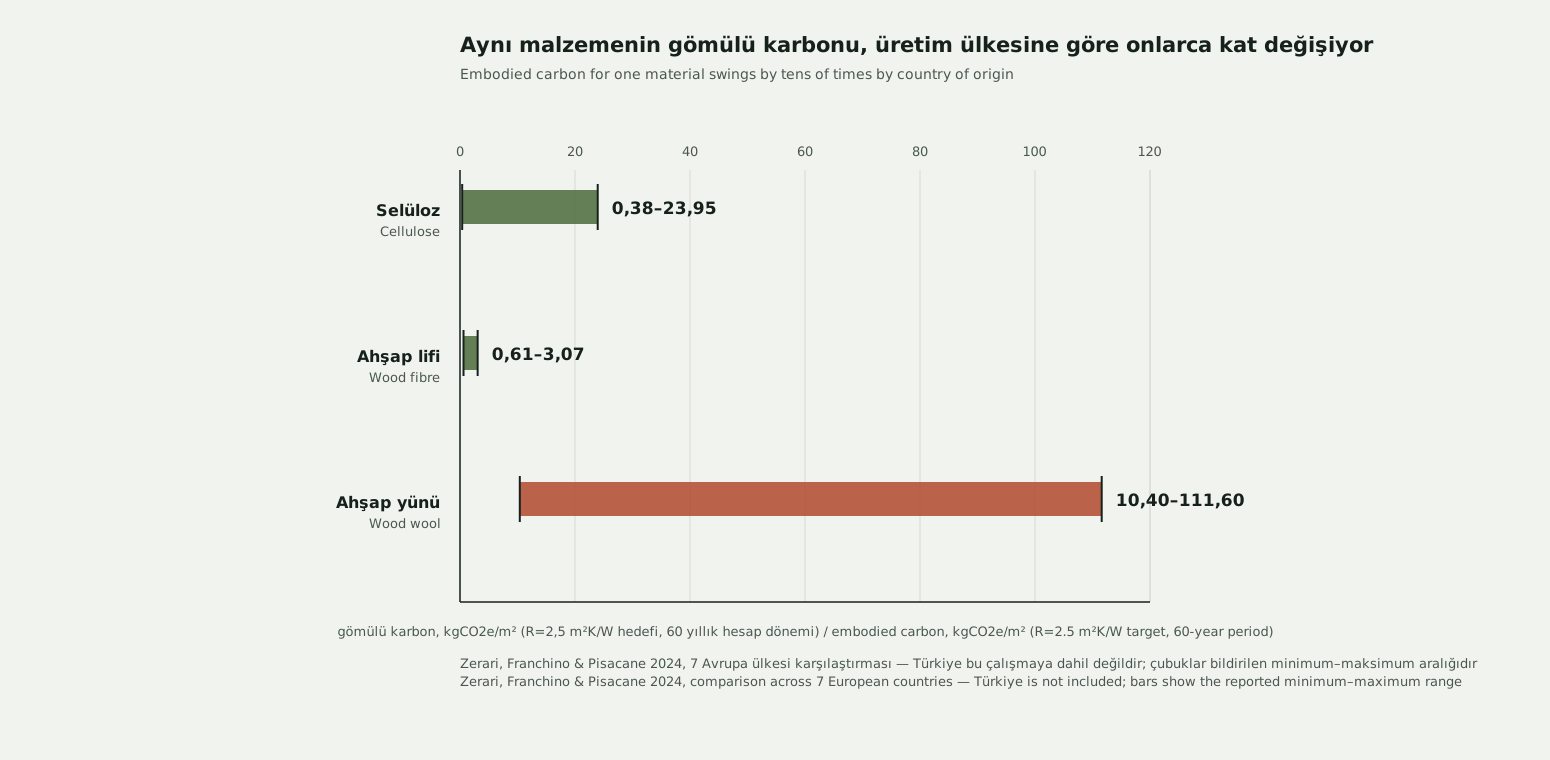
A 2024 peer-reviewed comparison (Zerari, Franchino & Pisacane, E3S Web of Conferences 585:01010) modelled the embodied carbon of bio-based insulation materials across seven European countries, using a consistent functional unit — 1 m² of insulation reaching R=2.5 m²K/W over a 60-year building life — specifically so figures from different countries could be compared on equal terms. The result undercuts the idea that a material category has one carbon number at all: cellulose ranged from 0.38 to 23.95 kgCO2e/m² depending on the country of manufacture, wood fibre from 0.61 to 3.07 kgCO2e/m², and wood wool from 10.40 to 111.60 kgCO2e/m² — close to a thirty-fold difference for wood wool alone, driven by differences in national electricity-grid carbon intensity, transport distance, binder chemistry and manufacturing process rather than anything intrinsic to the fibre. The same paper cites earlier work (Schulte et al. 2021, GCB Bioenergy) finding that bio-based insulation materials generally have lower environmental impact than EPS or stone wool — a real and useful finding, but one that describes an average tendency across many products, not a number any single bag on a shelf is entitled to claim without its own environmental product declaration (EPD).
Moisture buffering depends on how the board was made, not just what it's made of#
Wood fibre's other headline claim is hygroscopic "breathability" — the ability to absorb and release moisture vapour, buffering indoor humidity swings and tolerating incidental wetting better than a closed-cell foam. That is real, but a 2022 study (De Ligne et al., Frontiers in Plant Science) measured just how much it depends on manufacturing process rather than fibre chemistry alone. Testing six wood-fibre insulation products by floating-immersion water uptake over 144 hours, a wet-manufactured board (WFIB2) absorbed roughly 0.25 g/cm², while a dry-manufactured board (WFIB1) absorbed 1.09 g/cm² — more than four times as much — and a bitumen-treated board (BWFIB) absorbed only 0.09 g/cm², close to the water resistance of thermally modified solid wood used as the study's benchmark. All the boards released most of that moisture again on drying, which is the actual mechanism behind the breathability claim, but the four-times spread between two untreated boards of the same nominal material shows that "wood fibre" is not one hygric performance number any more than it is one thermal-conductivity number.

Sheep wool and the clothes moth: a documented, treatable risk#
Wool is, chemically, keratin protein — the same material a clothes moth larva (Tineola bisselliella) eats in a jumper, and there is a genuine, peer-reviewed body of evidence that untreated wool insulation is a real target. A 2019 laboratory study (Ruiu & Floris, Insects 10(11):379) directly compared pure untreated wool against a commercial wool insulation panel incorporating borate salts, exposing both to clothes-moth larvae for 15 days. The commercial, borate-treated panel showed significantly less mass loss (statistically significant at p<0.001) and significantly higher larval mortality (p=0.0003) than the untreated wool. The same study tested disodium octaborate tetrahydrate (DOT) directly and found concentration-dependent larvicidal effect, with good efficacy at 40–100 mg/mL. The finding is not "wool insulation attracts moths" as a blanket claim — it is a quantified, two-sided result: pure, untreated wool is measurably vulnerable, and a properly borate-treated commercial product is measurably, significantly more resistant. That is the same claimed-vs-verified distinction this series found in shipping-container grading (File 15): the label "wool insulation" covers both ends of that result, and only a treated, tested product earns the resistance claim.
Practical implication: a borate treatment (whether DOT in wool or borax/boric acid in cellulose) is doing two jobs at once — fire retardancy and pest resistance — in most commercial natural-fibre insulation. "Untreated" or "chemical-free" marketing for these materials is describing a product that has not been tested against either risk, not a superior one.
Türkiye: a domestic composite study and a standard that just changed#
A 2025 study from Gazi Üniversitesi (Şen & Çınar, Gazi Üniversitesi Fen Bilimleri Dergisi Part C 13(2):798–811) produced and tested low- and medium-density insulation boards made from sheep wool and wood chip mixtures at 10%, 20% and 30% wool ratios, following Turkish national test standards (TS EN 323, TS EN 12667, TS EN 319, TS EN 13446, TS EN 825). Thermal conductivity fell as wool content rose: the medium-density group improved from 0.093 W/mK at 0% wool to 0.086 W/mK at 20% wool, and the low-density group from 0.068 W/mK to 0.058 W/mK over the same range, with the best-performing low-density formulation reaching 0.044 W/mK — approaching XPS foam. The resulting assembly reached a thermal transmittance of 1.713 W/m²K, below the maximum the study's authors cite from the then-current Turkish standard. That standard has since moved: TS 825, Türkiye's binding building thermal-insulation rules standard, was revised and took effect on 1 April 2025, expanding its scope for the first time from heating-only design to both heating and cooling — a genuinely different design target than the one the 2025 wool-board study was tested against, and worth checking directly rather than assuming the older U-value ceiling still applies to a new project.
- Fire class typically trails mineral wool by several tiers (wood fibre commonly Class E vs. A1/A2) unless the specific product's own EN 13501-1 test report is checked.
- Embodied carbon for a material category is not one number — it can vary by an order of magnitude or more by country of manufacture, so a specific product's own EPD matters more than a category average.
- Moisture-buffering performance depends heavily on manufacturing process (wet vs. dry) and hydrophobic treatment, not on the fibre alone — a fourfold difference was measured between two untreated wood-fibre boards.
- "Natural" and "untreated" are not synonyms for durable: fire and pest resistance in commercial products almost always comes from an added borate treatment, not from the base fibre.
None of this argues against natural fibrous insulation — sheep wool, cellulose, wood fibre and hemp are all real, standards-backed materials with genuine environmental and hygric advantages over some conventional alternatives. What the evidence argues against is treating "natural" as a single performance guarantee. The thermal conductivity that matters is the one measured for the specific product, not the category; the fire class that matters is the one on that product's own EN 13501-1 report; the carbon figure that matters is the one on that product's own EPD, not a category average; and the durability that matters comes from a documented borate treatment, not from the absence of one.
Open knowledge — CC BY-SA 4.0. Copy it, correct it, cite it.
Related in the library
Share this