Library · Standards · File 23
Smart glass and electrochromic windows: one label, two technologies, very different numbers
"Smart glass" covers two technologies that solve different problems: slow, gradual electrochromic solar-control glazing governed by real durability and energy-code standards, and fast, binary PDLC/SPD privacy glass that was never trying to manage solar heat at all. A DOE report's real GSA-building measurements swing far more widely than any single simulated percentage, and Türkiye's domestic "akıllı cam" market turns out to be almost entirely the other technology.
Last reviewed — First publication; figures and claims checked against ISO 18543:2021, ASTM E2141-21, ANSI/NFRC 200-2023, the 2015 IECC/IRC dynamic glazing provisions (via the PNNL Building America Solution Center), the US DOE Building Technologies Office's December 2023 report "Better Windows, Better Outcomes," Park et al.'s 2019 Energies 12(6):1181 study, the Gauzy electrochromic-vs-PDLC technical comparison, and Açıksarı & Karasu's 2018 El-Cezeri Journal of Science and Engineering review
Fabian Kleiser · Unsplash License
Switching time: legacy EC 5-12 min · next-gen (Halio, ~10x faster per DOE) ~0.5-1.2 min · PDLC/SPD: seconds · Measured savings: Forrestal 39-48%, Portland 36% (lighting), Sacramento 29-65% (HVAC) vs. Seoul simulation 8.89% net · IECC/IRC dynamic glazing SHGC ratio: ≥2.4:1 · EC cost: $50-150/ft² vs. $15-30/ft² conventional
"Smart glass" is marketed as a single category, but it covers two technologies that solve genuinely different problems and answer to different standards. One family — electrochromic, thermochromic and photochromic glazing — changes tint gradually and reversibly to control solar heat gain and glare, and has real accelerated-aging, durability and energy-code standards behind it. The other family — PDLC, SPD and LCD-based "switchable" glass — changes between clear and opaque in a fraction of a second, and exists to control privacy and view, not solar heat. A specification that treats these as interchangeable options for the same problem is starting from a false premise before any product data even enters the conversation.
Two different problems called by the same name#
The mechanical difference is not subtle. Electrochromic glass uses a low-voltage electrical charge to drive ions between layers of an electrochromic device, gradually darkening or lightening the glass over minutes — and it needs continuous low power to hold a darkened state, releasing back toward clear if power is cut. PDLC glass works by a different physics entirely: liquid-crystal droplets suspended in a polymer matrix align under an applied current, letting light pass through in a fraction of a second; cut the power and the crystals scatter light again, so PDLC glass defaults to opaque, not clear, when unpowered. That single difference in default-off behaviour already tells you which category a given building need actually calls for: a conference-room privacy wall wants PDLC's instant, binary switch; a south-facing curtain wall managing solar heat gain across a full day wants electrochromic's slow, graduated control — and wanting the wrong one is a genuine specification risk, not a matter of taste.
Table 1 — Two categories, two purposes, two standards paths#
| Chromogenic (electrochromic/thermochromic/photochromic) | Switchable (PDLC/SPD/LCD) | |
|---|---|---|
| Primary purpose | Solar heat gain and glare control | Privacy and view control |
| Switching speed | Minutes (gradual, graduated states) | Milliseconds to a few seconds |
| Default state without power | Reverts toward clear | Opaque/scattering |
| Governing durability/energy standards | ISO 18543, ASTM E2141, NFRC 200, IECC/IRC dynamic glazing | No equivalent solar-performance code path |
The established path for solar-control glazing#
ISO 18543:2021, "Glass in building — Electrochromic glazings — Accelerated ageing test and requirements," is deliberately narrow in scope: it applies to electrically-switched chromogenic materials specifically and explicitly excludes photochromic and thermochromic alternatives, which change tint in response to light or heat rather than an applied current. In the US, ASTM E2141-21 covers the same durability question for electrochromic devices integrated into sealed insulating glass units — a four-step protocol (baseline measurement, accelerated thermal/UV/electrical-cycling stress, final measurement, comparison) that simulates roughly 10–25 years of real-world service in a fraction of the time, checking optical property retention, switching-speed retention and appearance defects. NFRC 200-2023 then governs how a dynamic glazing product's solar heat gain coefficient actually gets rated for a building's energy model: Section 4.5.H requires any product meeting the definition of dynamic glazing to be rated at both its fully-open and fully-closed positions rather than a single number, and US energy code (the 2015 IECC/IRC, Sections R402.3.2/N1102.3.2) lets dynamic glazing satisfy SHGC compliance on its own terms only when the ratio between its higher and lower labeled SHGC values is at least 2.4-to-1 and the product is automatically controlled in multiple steps — a real, checkable numeric bar, not a marketing claim of "dynamic performance."
Switching speed: the marketed number and the measured one#
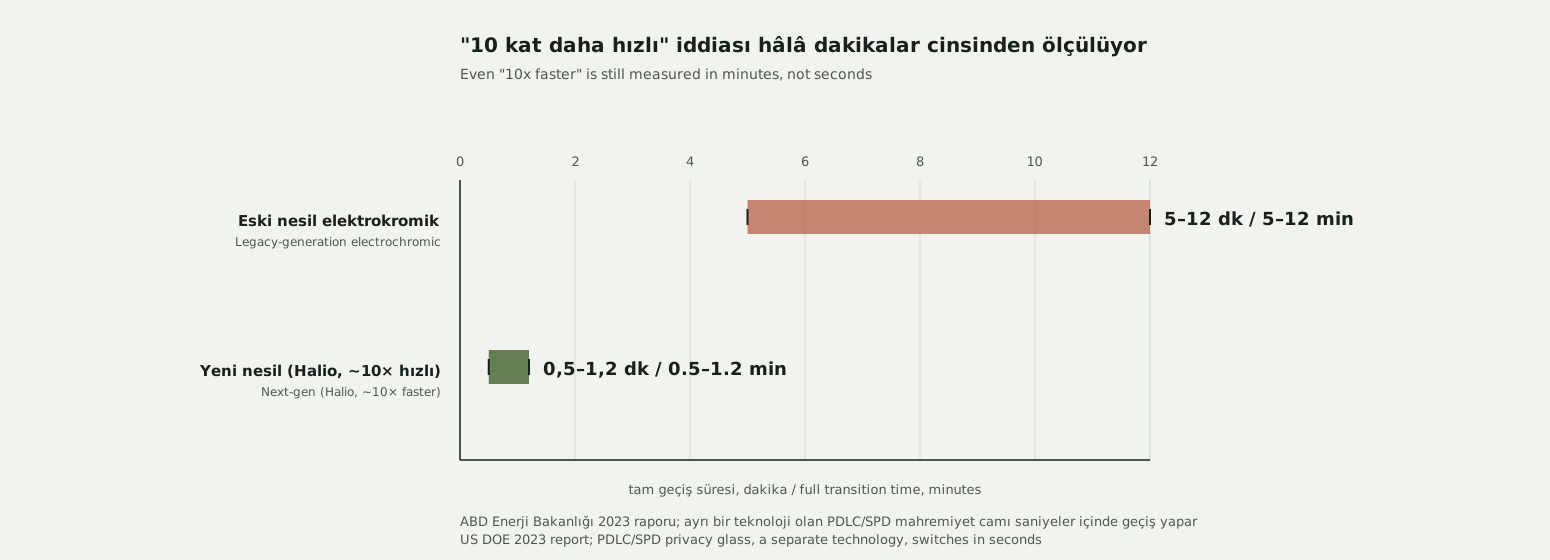
A December 2023 US Department of Energy Building Technologies Office report puts a specific number on the industry's long-standing switching-speed weakness: legacy electrochromic glazing takes a "relatively long time period necessary to fully switch window tint level (5–12 minutes)." The same report cites Halio's next-generation electrochromic technology as switching roughly 10 times faster than older products — a real, DOE-cited improvement, but doing the arithmetic on the DOE's own baseline still lands the faster product at roughly 30–72 seconds for a full transition, not the instantaneous switch a casual reading of "10x faster" might suggest. That is a genuine advance in electrochromic terms, and it remains an entirely different order of magnitude from PDLC or SPD privacy glass, which switches in a fraction of a second because it is solving a different problem with a different mechanism — the two numbers are not competing claims about the same technology, they describe two technologies that were never trying to do the same job.
Energy savings: real buildings measure a much wider range than one simulation#
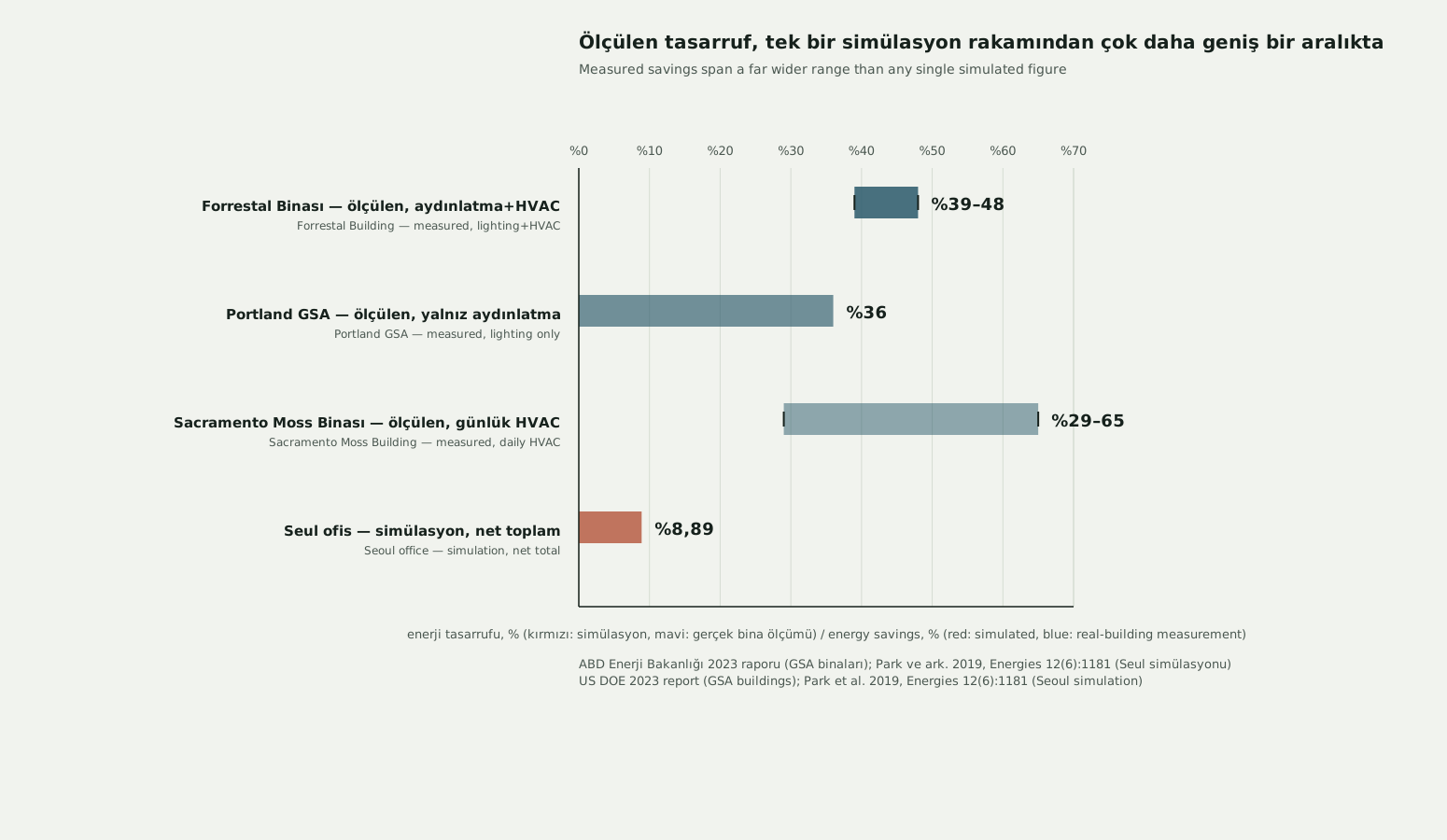
The same DOE report cites measured, not simulated, performance from real GSA federal buildings retrofitted with electrochromic glazing: the Forrestal Building in Washington, DC saw combined lighting-and-HVAC energy savings of 39–48%; the Portland, Oregon GSA building saw a 36% reduction in lighting energy specifically; and the John E. Moss Federal Building in Sacramento saw daily HVAC energy consumption fall 29–65% with peak HVAC demand down 25–58%, depending on the day and system measured. Set against that spread, a 2019 peer-reviewed whole-building simulation study of a standard Seoul office (Park, Hong, Choi, Choi, Lee & Moon, Energies 12(6):1181) is a useful honesty check: it modeled a much more modest 8.89% net annual energy reduction — and its own breakdown shows why a single savings percentage understates the real tradeoff involved. Cooling energy fell 13.16%, but lighting energy rose 14.53% in the same model, because a tinted electrochromic state reduces the daylight reaching the interior, which drives more electric lighting use to compensate. None of these figures generalizes to any other building: climate, HVAC system type, baseline glazing, occupancy schedule and control strategy each move the number independently, and measured field data (GSA) and simulated whole-building models (Seoul) are not directly comparable methodologies to begin with — the honest takeaway is the range itself, not any single percentage lifted out of it.
Durability testing exists because early devices needed it, and cost remains the real barrier#
ASTM E2141 and ISO 18543 exist as accelerated-aging standards because early-generation electrochromic devices had real, documented degradation problems — non-uniform tinting, haze, and switching-speed loss over repeated cycles and UV/thermal exposure — that a manufacturer's marketing sheet alone couldn't be trusted to disclose. The DOE report puts a concrete number on the other genuine barrier: commercially available electrochromic windows retail for roughly $50–150 per square foot today, against approximately $15–30 per square foot for conventional glazing — a real multiple, not a marginal premium, that the DOE's own 2030 target program aims to shrink to a $6.5/ft² residential and $11.80/ft² commercial premium rather than eliminate outright. Over $2 billion in private-sector investment has gone into the technology to date, which signals genuine industry confidence in where the cost curve is headed — but a specifier pricing a project today is working from the current number, not the 2030 target.
Türkiye: real academic research, a market dominated by the other technology#
Genuine Turkish academic engagement with chromogenic glazing goes back at least to Açıksarı & Karasu's 2018 review in the El-Cezeri Journal of Science and Engineering (5(2):437–457), which surveys electrochromic and related smart-glass materials science in real technical depth. What does not yet exist is a dedicated Turkish standard or building-code provision for dynamic/smart glazing specifically — no TSE-adopted equivalent of ISO 18543's electrochromic-specific accelerated-aging requirement, and no provision in Türkiye's national energy performance regulation comparable to the IECC/IRC's 2.4-to-1 dynamic-glazing SHGC ratio pathway. Türkiye does adopt the general international glass and building-energy standards this series has documented elsewhere, but nothing yet reaches down to the dynamic-glazing-specific level.
A direct check of Türkiye's domestically marketed "akıllı cam" product listings turns up a genuine pattern worth naming plainly: the products actually sold under that phrase are, overwhelmingly, liquid-crystal privacy glass — switching between clear and opaque for meeting-room partitions and projection screens, with no solar heat gain coefficient claims, no ASTM E2141 or ISO 18543 test data, and no energy-code angle at all. That is not a criticism of those products, which do their actual job (privacy, instant switching) well — but it means the Turkish retail market for "akıllı cam" is, in practice, almost entirely the switchable-privacy category this article's Table 1 distinguishes from solar-control glazing, not the electrochromic category the DOE and ISO/ASTM/NFRC standards above actually govern. Anyone specifying real solar-control dynamic glazing in Türkiye today is likely sourcing an imported electrochromic product tested to the international standards covered here, not a domestically marketed "akıllı cam" product — an honest gap worth naming rather than assuming away.
- "Smart glass" covers two technologies with different purposes, different physics and different standards — a specification should name which one (chromogenic solar-control, or switchable privacy) rather than the umbrella term alone.
- "10x faster" switching is a real, DOE-cited improvement in electrochromic terms, but it still lands around 30–72 seconds for a full transition — genuinely different from, not competing with, PDLC/SPD's sub-second privacy switching.
- Measured real-building energy savings (29–65% in one GSA building's daily HVAC) span a far wider range than any single simulated percentage (8.89% net in one Seoul study) — the honest number to quote is the range and its source, not one figure lifted out of context.
- Türkiye's domestically marketed "akıllı cam" retail market is overwhelmingly switchable-privacy glass, not the electrochromic solar-control category this article's standards section covers — a genuine market-labeling gap worth checking before assuming a locally sourced "akıllı cam" product does what an ISO 18543/ASTM E2141-tested electrochromic product does.
None of this argues against either technology. Electrochromic glazing has real durability standards, a real (if narrow, 2.4-to-1) energy-code pathway, and real measured savings in occupied federal buildings, even if that savings number varies enormously by building. PDLC and SPD privacy glass does its own job — instant, reliable, binary switching for view and privacy control — well, and was never trying to compete on solar performance in the first place. What the phrase "smart glass" alone can't tell you is which of those two genuinely different jobs a given product is actually built to do, and that is the one distinction worth insisting on before any other spec sheet gets read.
Open knowledge — CC BY-SA 4.0. Copy it, correct it, cite it.
Related in the library
Share this